
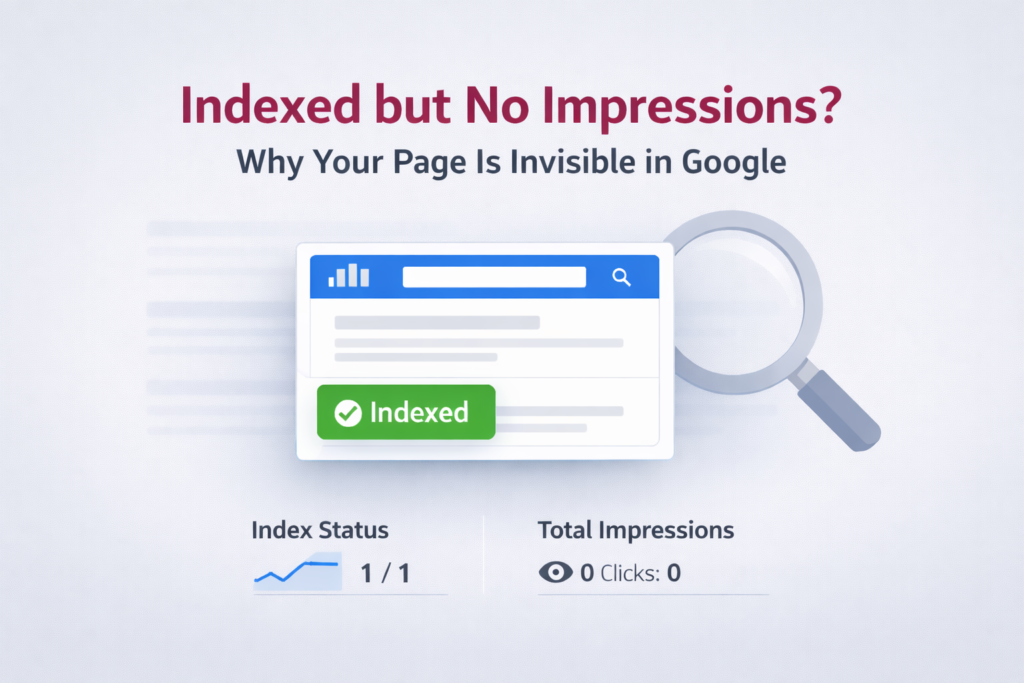
Why This Situation Happens More Than Most People Think
If your page is indexed but showing zero impressions in Google Search Console, the problem usually isn’t indexing — it’s ranking eligibility. Google has accepted the page into its index, but it has not found enough relevance or authority signals to surface it for real search queries.
This is one of the most misunderstood situations in SEO.
Many site owners assume something is technically broken. In reality, the page is often competing in a query space where Google sees stronger demand alignment, stronger authority, or clearer intent signals elsewhere.
Understanding the difference between indexing and visibility is the first step to diagnosing why a page indexed but no impressions in Google.
Quick Answer
If your page is indexed but shows zero impressions in Google Search Console, Google has stored the URL but does not consider it competitive for active queries.
Common causes include:
- Low search demand
- Weak ranking position
- Internal isolation
- Keyword cannibalization
Indexed does not equal visibility.
This is the core reason a page indexed but no impressions situation appears in Google Search Console.
When I diagnose this issue, I analyze demand, authority, and structure before touching the content.
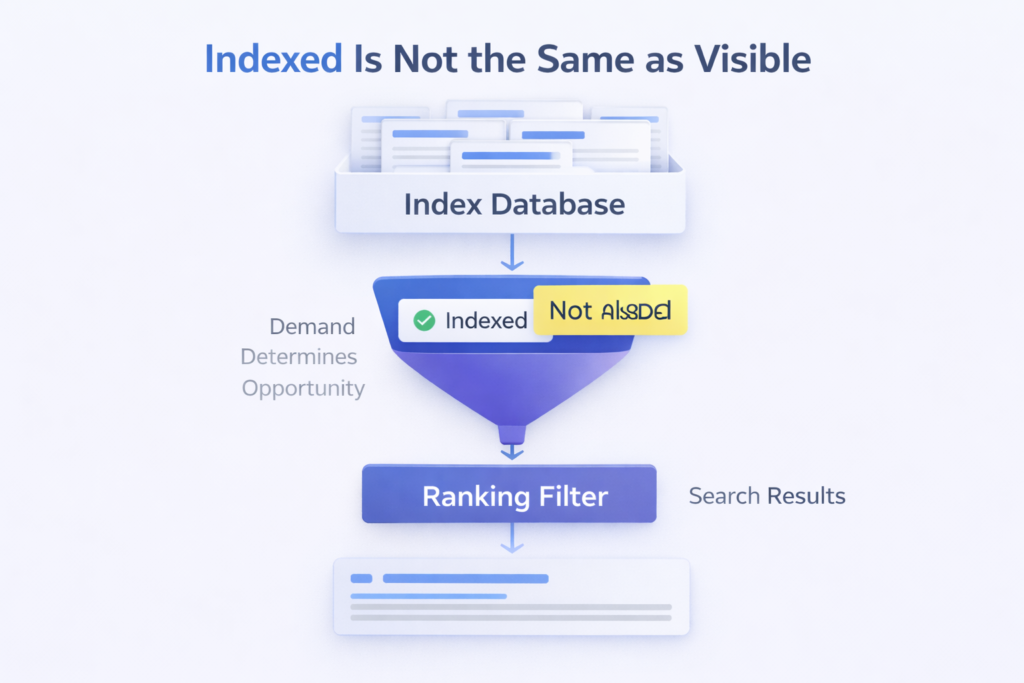
Indexed Is Not the Same as Visible
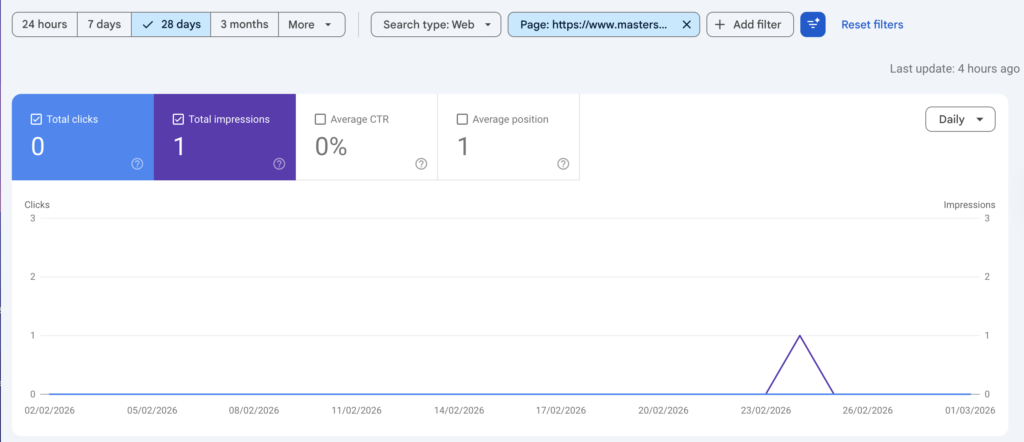
If you’re staring at a page that’s “Indexed” and still showing 0 impressions, you’re not alone.
I see this exact situation constantly: the URL is in Google’s index, but it’s not showing up for meaningful queries.
Here’s the key distinction:
Indexed is a database decision.
Impressions are a ranking decision.
When a page is indexed but no impressions appear, Google simply hasn’t found a strong enough reason to surface it in search results yet.
Most people react emotionally at this point.
They rewrite content.
Increase word count.
Or assume something is broken.
I don’t.
When a page is indexed but not getting traffic, I break the diagnosis into four measurable layers:
Demand
Position
Authority
Structure
Once those layers are separated, the solution becomes predictable.
Step 1 — Confirm the Index Is Clean
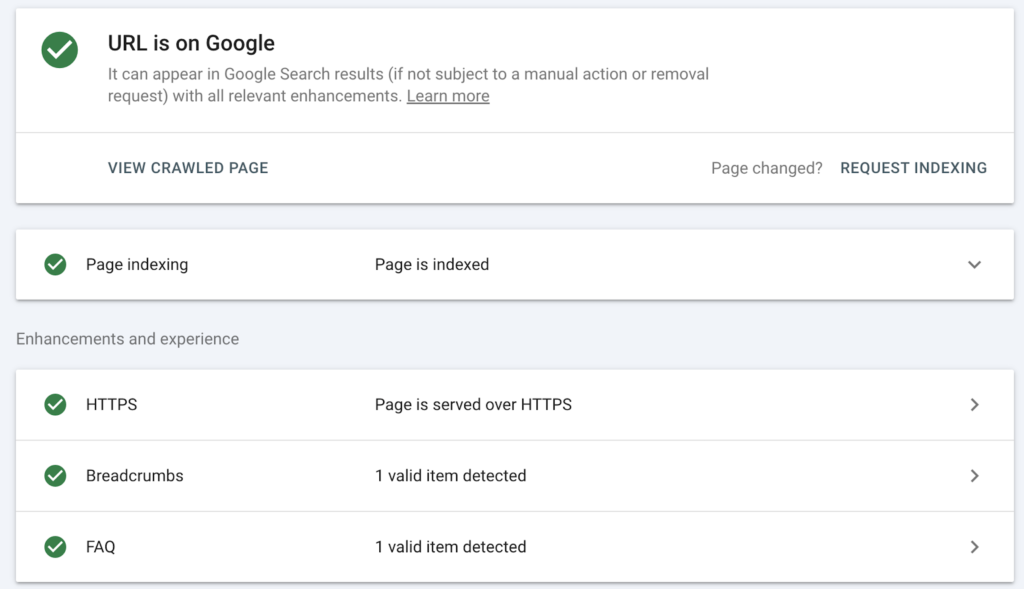
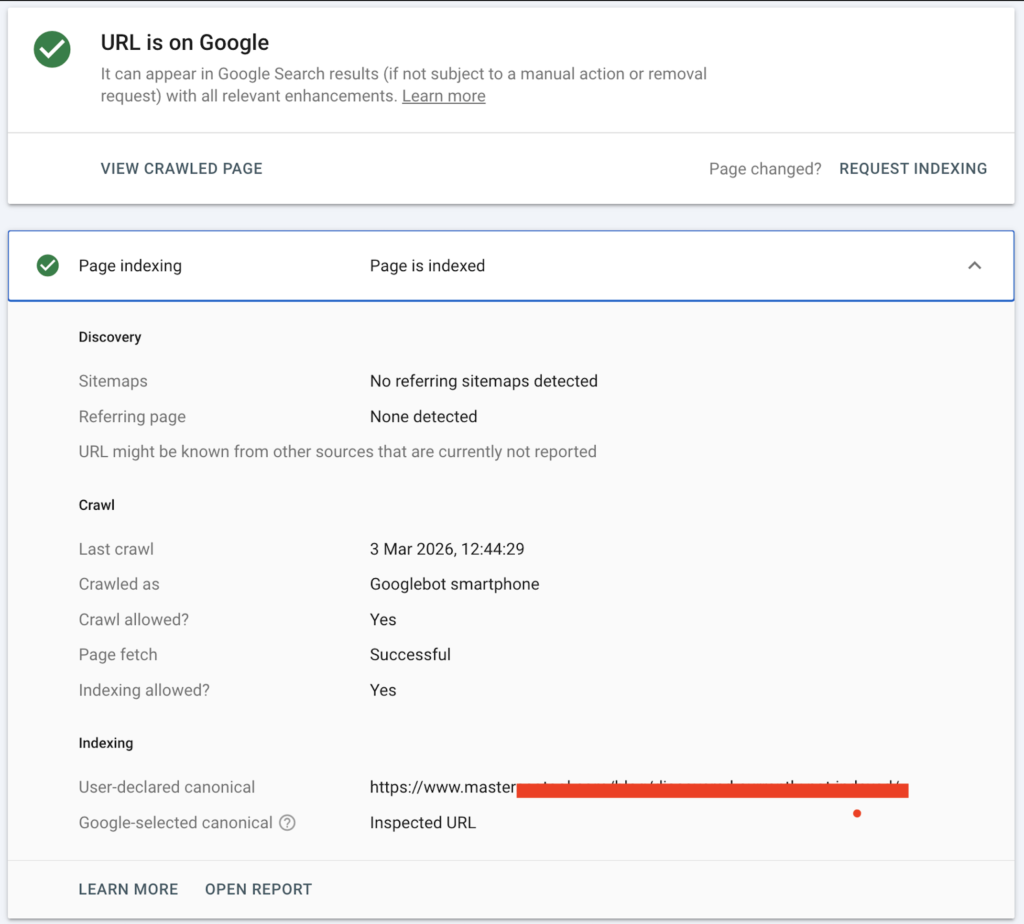
Before diagnosing performance, I confirm the page is truly indexed correctly.
I check this using the Google Index Checker tool.
I verify:
- The exact URL version is indexed
- Canonical matches the live URL
- No alternate page was selected
- The correct property is being monitored in GSC
Many “zero impressions” cases are actually measurement problems.
For example:
People often analyze the non-www property while their canonical domain is www, which makes impressions appear missing.
Google explains these reporting situations here
Once measurement issues are eliminated, I move to ranking signals.
Step 2 — Evaluate Search Demand
If the page is indexed but not appearing in search results, I evaluate search demand next.
No demand = no impressions.
Even a technically perfect page can show zero impressions if nobody searches for the targeted query.
In many cases, a page indexed but no impressions problem simply means the keyword has little or no real search demand.
Modern AI-assisted publishing has created many pages that sound useful but don’t map to real search behavior.
Before optimizing, I validate keyword grouping and intent clusters.
My clustering method is explained in AI Keyword Clustering SEO 2026.
If a page sits outside a real keyword cluster, it rarely gains traction even if indexed.
| Demand Situation | Interpretation | Action |
|---|---|---|
| Zero search volume | No queries exist | Change keyword |
| Very low volume | Weak opportunity | Support with cluster |
| Moderate volume but zero impressions | Ranking weakness | Move to authority audit |
Demand is always the first filter.
Step 3 — Check Ranking Position
If demand exists, the next question is ranking position.
An indexed page can technically rank at position 85.
That means:
Indexed.
But effectively invisible.
I measure this using my Keyword Position Checker.
If the page ranks beyond position 70–80, impressions may never appear consistently.
This indicates a ranking authority problem — not an indexing problem.
If rankings remain weak after indexing, a detailed Backlink Analysis can help identify authority gaps that limit visibility.
This is one of the most common technical explanations behind a page indexed but no impressions situation in Google Search Console.
Step 4 — Audit Internal Authority
Most indexed pages with no impressions are structurally weak.
They often suffer from:
- Very few contextual internal links
- Weak anchor alignment
- Missing topical cluster pages
- Deep crawl depth
I measure internal link strength using the Website Links Count Checker.
If the page is isolated, I reinforce it strategically rather than rewriting it.
Internal linking is not about quantity.
It’s about topical confirmation.
I explain this in more depth inside What Is Topical Authority in SEO 2026.
Without cluster reinforcement, indexed pages often remain invisible.
In many SEO audits, this structural weakness is the real cause behind a page indexed but no impressions issue.
Step 5 — Check Cannibalization
Another common explanation is keyword cannibalization.
Sometimes a page shows zero impressions because another page on the same site absorbs the ranking signals.
In those cases I evaluate whether to:
Merge the pages
Redirect one URL
Or reposition keywords
You can see how indexing signals differ from crawl signals in Crawled – Currently Not Indexed Fix Guide.
And how discovery signals work in Discovered – Currently Not Indexed Explained.
These issues often appear together on growing sites.
Structural Diagnostic Overview
| Condition | Layer | Diagnosis | Solution |
|---|---|---|---|
| Indexed + zero demand | Strategy issue | No search activity | Change keyword |
| Indexed + position >80 | Authority gap | Weak ranking strength | Improve cluster |
| Indexed + duplicate targeting | Structure problem | Cannibalization | Merge pages |
| Indexed recently | Timing | Fresh page | Monitor 2–4 weeks |
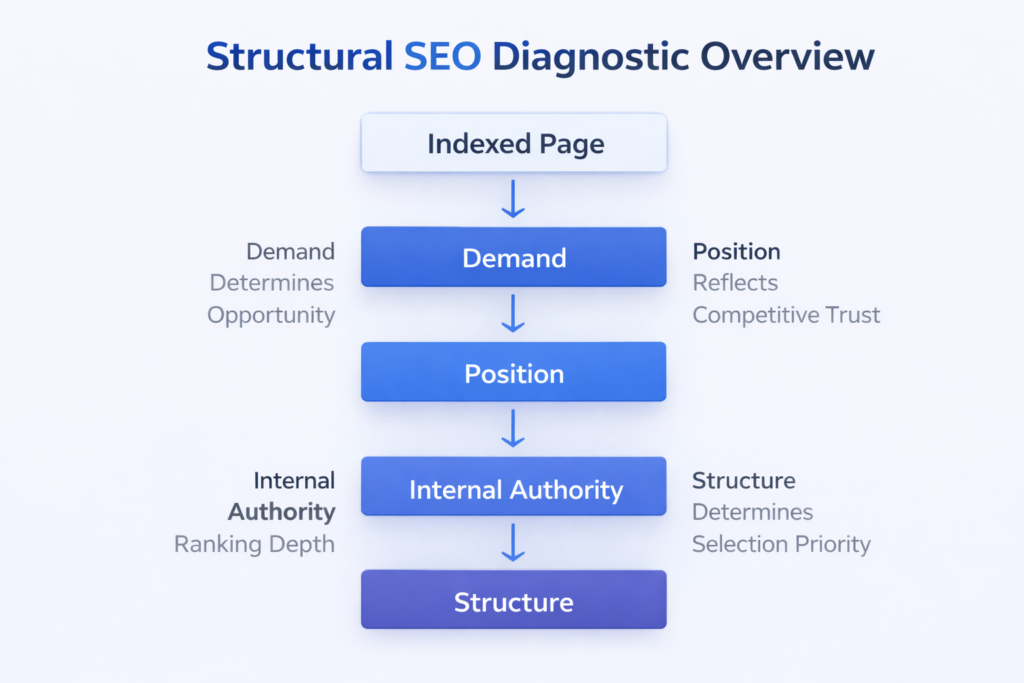
This framework removes guesswork.
Content-Intent Alignment
Another hidden reason for a page indexed but no impressions issue is search intent mismatch.
Even if demand exists, the content may not match the dominant SERP intent.
Google rewards the best match for user behavior, not just good writing.
I check:
- Query intent type
- Title phrasing
- First 150 words
- Heading structure
If searchers expect a fix guide but the page reads like a definition, impressions often remain zero.
In those cases I refine structure rather than rewriting everything.
Crawl Priority and Reassessment
Even indexed pages require periodic crawl reassessment.
If a page:
- Has weak internal linking
- Is buried deep in site architecture
- Receives few crawl signals
Google may delay ranking reevaluation.
Improving internal structure accelerates reassessment.
You can always return to the Master SEO Tool to access diagnostic tools that help evaluate crawl behavior across your site.
What Is Normal
It is completely normal for a newly indexed page to show zero impressions temporarily.
Typical timeline:
| Timeframe | Expected Behavior |
|---|---|
| Days 1–14 | Discovery and indexing |
| Days 14–30 | Early ranking testing |
| Days 30–45 | Impressions begin appearing |
If impressions remain zero after 60+ days with real search demand, the issue is usually structural.
Visibility Classification
| Visibility State | Interpretation | Recommended Action |
|---|---|---|
| 0 impressions + no demand | Strategy issue | Re-target keyword |
| 0 impressions + ranking >80 | Authority gap | Strengthen cluster |
| 1–10 impressions monthly | Early testing | Improve signals |
| Impressions but no clicks | CTR issue | Improve title |
FAQs
Why is my page indexed but showing zero impressions in Google Search Console?
If a page is indexed but shows zero impressions, it usually means the page is not ranking high enough to appear in search results. This can happen when the keyword has low search demand, the page ranks beyond position 70–80, internal linking is weak, or another page on the site is competing for the same query.
How long does it take for impressions to appear after a page is indexed?
For new pages, impressions typically begin appearing within 2–6 weeks after indexing. During this period, Google tests the page across different queries. If the page remains at zero impressions after 45–60 days, the issue is often related to weak authority signals, search demand mismatch, or internal linking structure.
Can a page be indexed but still not rank in Google?
Yes. Indexing only means Google has stored the page in its database. Ranking depends on additional factors such as content relevance, domain authority, internal linking strength, search demand, and competition for the target query.
Does internal linking affect whether an indexed page gets impressions?
Yes. Internal links help Google understand the importance and topical relevance of a page. If a page receives few contextual internal links or sits deep within the site structure, Google may index it but give it low ranking priority, which can result in zero impressions.
What is the fastest way to fix a page indexed but no impressions issue?
The most effective fix is to diagnose the root cause first. Check whether the page targets a keyword with real search demand, verify its ranking position, strengthen internal links from related pages, and ensure there is no keyword cannibalization within the site.
Final Perspective
When I see “page indexed but no impressions,” I don’t treat it as a Google error. I treat it as a signal.
Indexed confirms inclusion, while impressions reflect competitive trust. Demand determines opportunity, authority determines ranking depth, internal linking determines priority, and cannibalization determines selection.
If you treat indexing as a finish line, you will always feel stuck. Indexing is only the entry point. Visibility is earned through structure and relevance.
So when your page is indexed but not getting traffic, I don’t rewrite randomly. I diagnose four things in order: demand, ranking position, internal authority, and cannibalization.
That sequence keeps the process predictable, scalable, and measurable.