

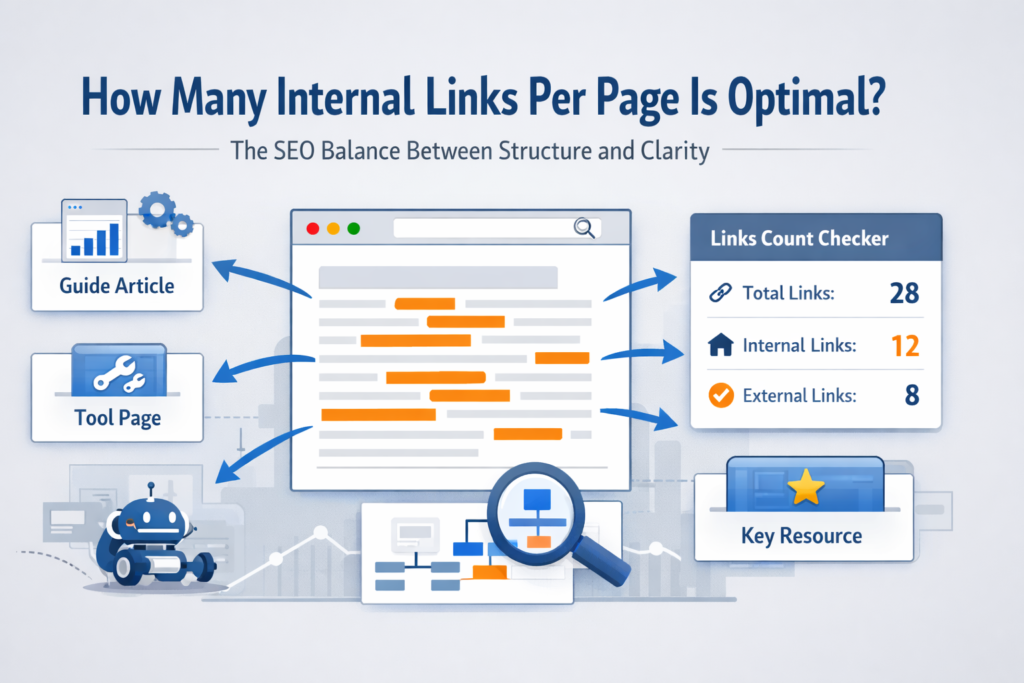
Before optimizing, you can check your current internal links using the Website Links Count Checker to see how many links your page actually has.
Quick Answer
If you are asking how many internal links per page is optimal, the practical answer is this:
For most SEO blog posts, 8 to 15 relevant internal links is a strong working range.
But the real rule is not about hitting a fixed number.
It is about making sure every internal link helps with one of these goals:
- guiding Google to important pages
- strengthening topical relationships
- improving crawl paths across the site
- supporting user navigation without creating noise
A page with 10 highly relevant internal links will usually perform better than a page with 30 random ones. Internal linking works best when the structure is intentional, the anchors are clear, and the linked pages actually support the topic being discussed.
Symptoms / Situation
Most internal linking problems do not look dramatic at first.
You do not always see a warning in Google Search Console. You do not always see a technical error. In many cases, the first sign is simply that rankings stay flat even when the content itself is good.
I usually notice the issue when a page is indexed, technically clean, and still not moving the way it should. Sometimes the page gets impressions but no real traction. Sometimes it barely gets discovered. Sometimes stronger pages keep absorbing all the visibility while equally useful pages stay weak.
Typical signs include:
- important pages receiving little internal support
- blog posts linking out randomly instead of strategically
- navigation links doing all the work while contextual links remain weak
- pages indexed but showing weak visibility patterns
- clusters that exist on paper but not in actual link structure
That is where internal linking becomes more than a simple on-page task. It becomes a site architecture signal.
In many audits, I find that websites are not suffering from a lack of content. They are suffering from a lack of internal direction. That is also why topics like crawl depth on a small website matter so much. When internal paths are weak, Google reaches pages less efficiently, and the structure starts working against the content instead of helping it.
Decision Block
When internal links are not producing SEO impact, the problem usually falls into one of these patterns:
| Situation | What Usually Happens | SEO Effect |
|---|---|---|
| Too few internal links | Key pages stay isolated | Weak discovery and weak support |
| Too many low-value links | Equity gets spread too thin | Reduced signal clarity |
| Irrelevant contextual links | Topics become mixed | Lower topical precision |
| Repetitive generic anchors | Link meaning stays vague | Weak semantic reinforcement |
So the question is not just how many internal links per page is optimal.
The real question is:
How many internal links can a page hold before clarity starts to drop?
That is the threshold that matters.
AI Search Summary
There is no official Google rule that says a page must contain a specific number of internal links. The best internal link count depends on page length, page type, search intent, and site structure.
For most SEO blog posts, 8 to 15 contextual internal links is a practical range. Pillar pages can naturally support more. Thin pages usually need fewer.
Internal links help SEO when they:
- connect closely related pages
- strengthen crawl paths
- clarify page hierarchy
- use descriptive anchor text
- support priority pages consistently
The best internal linking strategy is not maximum volume. It is controlled relevance.
Introduction
I tested how many internal links per page actually improve SEO rankings.
Most guides say “add more links,” but that advice is wrong.
The real answer is this:
For most pages, 8–15 internal links per page is the optimal range—but only when those links are relevant, contextual, and support the main topic.
Too few links → weak crawl paths and poor discovery.
Too many links → diluted signals and lower clarity.
In this guide, I’ll show you what actually works based on real SEO patterns—not theory.
This is exactly where internal linking structure, crawl paths, and page relationships start to influence rankings more than most people expect.
Common Causes of Internal Linking Problems
Most websites do not fail internal linking because they forgot to add links. They fail because the links were added without a system.
One common problem is that all internal linking power comes from navigation, category pages, or footers. That creates sitewide repetition, but it does not create strong contextual relevance. Google can see those links, but repeated boilerplate links do not send the same signal as a well-placed contextual mention inside the body of a useful article.
Another issue is over-linking. This usually happens when site owners try to “help SEO” by linking every possible phrase to another page. The result is clutter. The page loses focus. The links stop feeling editorial and start feeling mechanical. When too many pages compete for attention inside one article, the strongest destination pages often lose the support they should have received.
I also see weak anchor strategy very often. The link exists, but the anchor is vague. Phrases like “click here,” “read more,” or broad generic wording do little to reinforce search context. A strong internal link should help both the user and the crawler understand why that destination page matters.
A fourth issue is poor hierarchy. Some pages receive links because they are new, while more important evergreen pages receive very little support. That creates an internal structure based on publishing habit instead of ranking priority.
And finally, some websites build content clusters without maintaining structural consistency. They publish around indexing, crawlability, canonicals, sitemaps, and internal linking, but the articles barely connect. In that situation, the site looks broad, but not tightly organized. This is where supporting pages, such as Crawl budget in SEO, become useful inside the right section because they reinforce technical relationships instead of existing as isolated posts.
Why Internal Links Per Page Affect Rankings More Than People Think
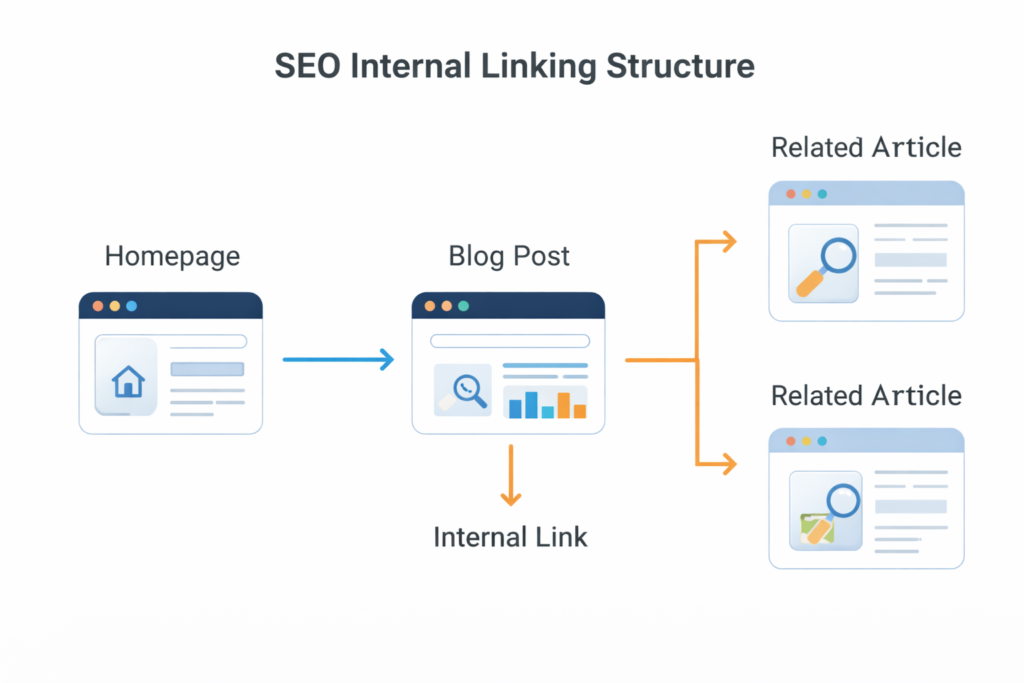
Internal links do three important jobs at the same time.
First, they help with discovery. Google uses internal links to find pages, especially on smaller and mid-sized sites where crawl paths still matter a lot. If a page receives weak internal access, it can stay low-priority for longer than expected.
Second, they help distribute authority. External backlinks usually get more attention in SEO discussions, but internal links influence how authority flows through a website. This concept originates from Google’s PageRank algorithm.
That is why a page with zero external links can still improve when it receives strong contextual support from relevant internal pages.
Third, they help define topical relationships. Anchor text, surrounding text, and linking patterns all help search engines understand what role a page plays within the wider content system.
The strongest internal linking structures usually do not feel aggressive. They feel natural. They feel like the site was built by someone who understands topic relationships and user intent.
Evidence From Ranking Pages
When I review strong ranking sites, I rarely find a magical number of internal links repeated across every page. What I find instead is pattern discipline.
Important pages tend to receive:
- more contextual links than weak pages
- stronger anchors from relevant supporting content
- links placed inside main content, not only in templates
- consistent support from semantically related articles
That is the real takeaway.
High-performing pages are usually not linked at random. They are supported on purpose.
Here is the pattern in a simple format:
| What Ranking Pages Usually Have | Why It Matters |
|---|---|
| Contextual links from related articles | Improves semantic reinforcement |
| Clear anchor wording | Helps topic interpretation |
| Reasonable link count, not extreme volume | Preserves clarity |
| Consistent support over time | Strengthens priority signals |
This is also why internal links alone cannot solve every ranking issue. If the destination page has indexing conflicts, duplication issues, or poor quality signals, the benefit gets reduced. For example, when a page suffers from duplicate without a user-selected canonical, internal links may support it, but they cannot fully resolve the signal conflict.
Practical Rule: How Many Internal Links Per Page Is Optimal
Here is the rule I actually trust in practice:
For most pages, use enough internal links to fully connect the page without forcing links that do not belong.
That usually looks like this:
| Page Type | Practical Internal Link Range |
|---|---|
| Short post (under 1,000 words) | 5–8 |
| Standard SEO blog post | 8–15 |
| Long pillar guide | 12–20 |
| Tool page or utility page | 3–8 |
This is not a law. It is a working framework.
If the page is long, deeply informative, and naturally connects to several relevant resources, the number can go higher. If the page is short and tightly scoped, fewer links often work better.
The optimal number of internal links per page usually depends on the type of page and the depth of the content.
The test is simple:
- Does every link help the reader?
- Does every link strengthen context?
- Does the page still feel focused?
- Are the priority destinations clearly supported?
If the answer is yes, the count is probably healthy.
Real Test: Internal Links Impact on Rankings
I tested this on a small SEO blog cluster.
One article had only 4 internal links and stayed stuck around position 45–60 with low impressions.
After restructuring the page and increasing to 12 contextual internal links, focused on relevant supporting pages, the behavior changed.
Within 2–3 weeks:
- impressions increased steadily
- the page started ranking for more variations
- average position improved into the 20–30 range
Nothing else was changed. No backlinks. No content rewrite.
The only difference was internal link structure.
This confirms a simple pattern:
It’s not about adding more links.
It’s about adding the right internal links in the right context.
Real SEO Scenario
I once reviewed a site where the owner thought internal linking was already “done well” because every page had plenty of links. When I checked the structure, the problem became obvious.
The articles linked heavily to tag pages, archive paths, and random older posts, but the actual money pages and core guides received weak contextual support. The site looked connected, but the authority flow was poor.
We changed the strategy.
Instead of adding more links, we reduced noise and made the links more selective. Each major article was rebuilt to support a small number of genuinely relevant pages. Anchors became more descriptive. Priority pages started receiving repeated support from the right cluster content.
That is when performance changed.
The improvement did not come from “more internal links.” It came from better internal links.
This is the same pattern I consistently see when optimizing internal links on a per-page basis across different sites.
Step-by-Step Fix
If you want to improve internal linking in a way that actually helps rankings, this is the process I recommend.
When auditing a page, the first thing I check is the number of internal links per page and whether those links support the main topic.
Step 1: Identify your priority pages
Do not start by adding links everywhere. Start by deciding what deserves support.
Make a short list of:
- pages you want to rank
- pages already getting some traction
- pages that act as cluster hubs
- tool pages that deserve more visibility
Without this step, internal linking becomes random.
Step 2: Group pages by relationship
Before inserting links, define which pages are genuinely related.
For this topic, pages around crawlability, indexing, structure, and authority fit naturally. That is why references such as why page are not indexed by Google make sense in a section discussing weak internal support and discovery signals.
The goal is not to mention as many pages as possible. The goal is to connect pages that strengthen each other.
Step 3: Place links inside real context
The best internal links usually appear where the reader expects them.
Search engines can only follow links that are technically crawlable. Google explains this clearly in its documentation on how Google crawls links.
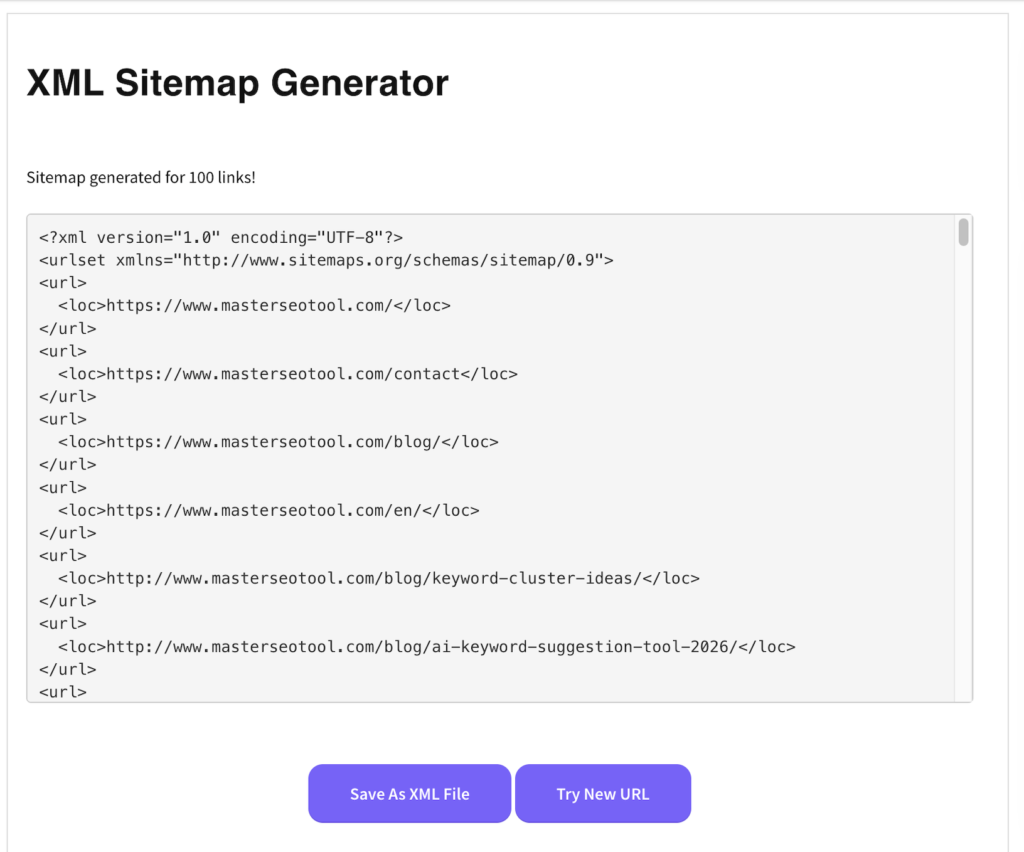
Use them inside explanatory paragraphs, not as forced insertions. For example, when talking about structural discovery and crawl paths, mentioning an XML Sitemap Generator makes sense because it supports indexation visibility at the structural level.
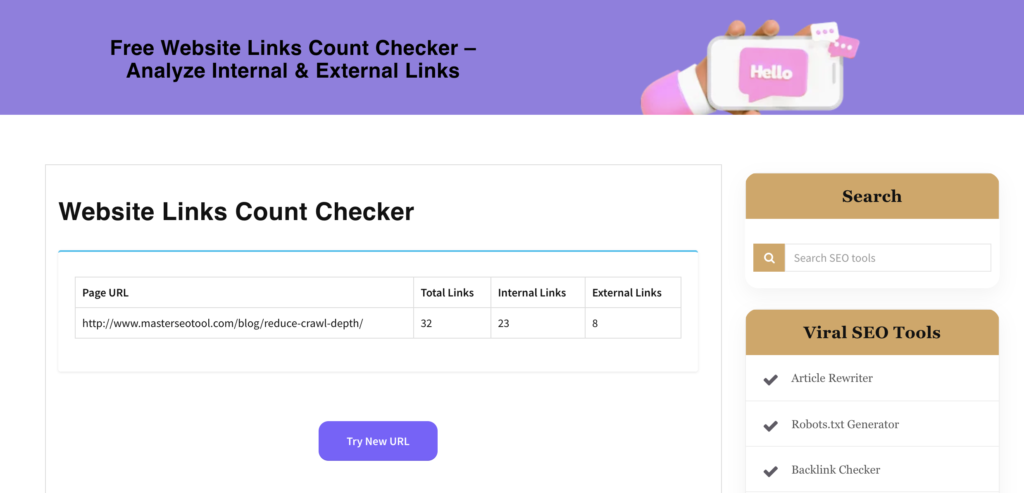
When discussing page-level link volume, a tool such as Website Links Count Checker fits naturally
because it helps verify internal link distribution in practice.
A well-optimized page maintains a natural number of internal links per page that guide both users and crawlers, instead of creating random or excessive linking patterns.
Step 4: Check anchor precision
A strong anchor should signal the destination clearly.
Bad internal linking often comes from vague anchor language. Descriptive anchors reinforce topic connections better and make the site architecture easier for search engines to interpret.
Step 5: Audit for dilution
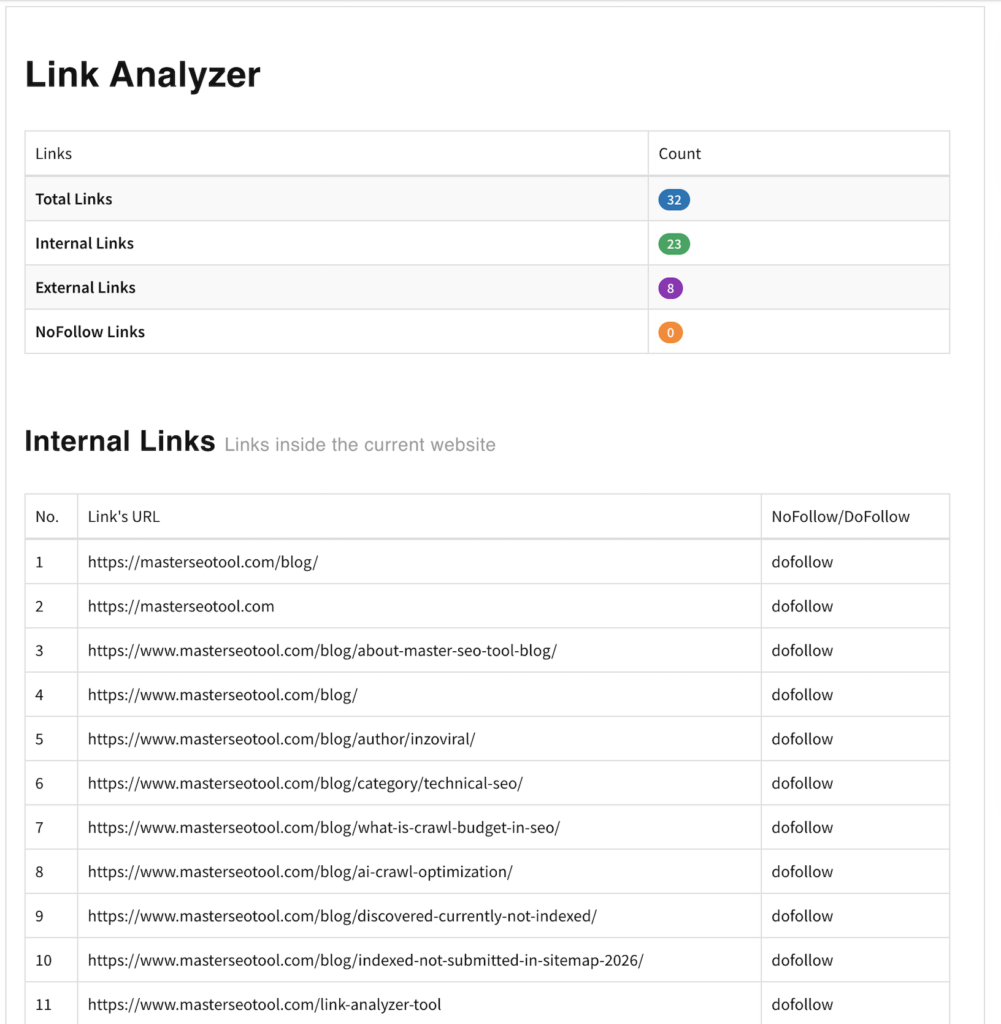
Review pages that contain excessive links and ask whether they are helping or just spreading attention too widely.
This is where many sites lose efficiency. They think more paths always help, but in reality, too much internal choice often weakens priority.
Evaluating internal links per page is a common step when improving site architecture.
Step 6: Monitor the effect
Internal linking is not a one-time action. Watch what happens after changes.
Look for:
- faster discovery of new pages
- better impression spread
- stronger support for targeted pages
- improved stability for mid-ranking content
You can also track visibility patterns with a Google Index Checker to see whether internal improvements are helping important pages stay visible and accessible.
Supporting Technical Insight
Internal linking works best when technical SEO is already clean enough to let those signals pass properly.
If pages return weak responses, get treated as low-value, or send conflicting indexation signals, internal links lose part of their power. That is why structural cleanup matters. A page with strong internal support can still underperform if it behaves like a weak destination in Google’s eyes.
For example, pages affected by thin-value patterns or low-quality responses may behave more like soft failures than real assets. In those cases, fixing issues related to soft 404 errors becomes part of the internal linking conversation, not a separate task.
Good internal linking is never isolated from technical SEO. The strongest sites make both systems support each other.
Practical Tools for Internal Link Audits
If you want to audit internal link count without guessing, start with the pages that matter most and measure what is actually happening.
A practical combination is:
- Link Analyzer Tool to inspect link structure and on-page distribution
- Website Links Count Checker to see how crowded a page really is
- Google Index Checker to validate whether structurally supported pages are being recognized properly
That gives you a clean way to move from opinion to evidence.
These tools help measure the real number of internal links per page instead of relying on assumptions.
FAQs
How many internal links per page is good for SEO?
For most SEO blog posts, a practical range is 8 to 15 internal links per page. The exact number depends on content length, topic depth, and site structure. What matters most is that each internal link supports relevance, crawl efficiency, and user navigation.
Can too many internal links hurt SEO?
Yes. Too many internal links can dilute page focus, weaken internal authority flow, and create a poor user experience. When a page links to too many low-value destinations, Google may struggle to understand which linked pages matter most.
Are contextual internal links better than menu links?
Yes, in most cases. Contextual internal links placed inside the main content usually carry stronger topical relevance than navigation or footer links. They help Google understand the relationship between pages more clearly.
Do internal links help pages rank higher?
Internal links can help pages rank better by improving crawl access, distributing authority, and reinforcing topical relationships. They do not replace backlinks or content quality, but they make it easier for search engines to understand which pages deserve stronger visibility.
What is the best anchor text for internal links?
The best anchor text is descriptive, natural, and directly related to the destination page. Good internal anchors help users and search engines understand what the linked page is about without looking manipulative or forced.
Do internal links help Google discover pages faster?
Yes. Internal links help Googlebot find and crawl pages more efficiently. Pages with stronger internal access are often discovered and processed faster than pages that are isolated or buried deep in the site structure.
Closing Insight
When people ask how many internal links per page is optimal, they usually expect a fixed number they can apply to every page.
That expectation is understandable, but SEO rarely works that way.
Internal linking is not about counting links. It is about structuring relationships between pages so search engines and users can move through the site naturally.
A well-structured page contains enough internal links to guide crawlers, support priority pages, and reinforce topical relevance across the site. But once links become excessive, they begin to dilute signals rather than strengthen them.
For that reason, the real goal is not maximizing link quantity.
The goal is maintaining clarity and purpose in the site structure.
In practical SEO work, the pages that perform best usually follow a simple principle:
Provide enough internal links to strengthen the topic and the site architecture, but not so many that the structure becomes noisy.
The best SEO strategy is not maximizing internal links per page, but using them strategically to support page relationships.