

For years, meta descriptions were treated as a minor SEO detail—something written once, forgotten, and rarely revisited. That approach no longer works. In 2026, search results are more competitive, more dynamic, and more influenced by user behavior than ever before. A well-written meta description will not magically push a page from position ten to position one. Still, it can significantly influence whether users click your result or scroll past it.
As an SEO consultant, I see the same issue repeatedly during audits: good content with poor click-through rates simply because the meta descriptions fail to communicate value. This is where an AI SEO meta description generator can be useful—if it is used correctly. This guide explains how these tools actually help, where they fall short, and how to use them responsibly to improve real-world performance.
Quick Answer:
An AI SEO meta description generator helps you create optimized descriptions that improve click-through rate by matching search intent, highlighting value, and encouraging users to choose your result.
If you want to understand how search engines interpret content context, this guide on AI crawl optimization explains how modern indexing systems evaluate pages.
What is an AI SEO meta description generator?
An AI SEO meta description generator is a tool that automatically creates optimized meta descriptions based on page topic, keywords, and search intent to improve search visibility and click-through rate.
Why Meta Descriptions Still Matter in 2026
Despite common misconceptions, meta descriptions have not become irrelevant. While Google does not use them as a direct ranking factor, they strongly influence user behavior. Click-through rate remains a critical performance signal, especially in competitive search results where multiple pages are closely matched in relevance.
In 2026, Google rewrites meta descriptions more often than it used to, but only when the original description is poorly aligned with search intent. When a description clearly matches what users are looking for, Google frequently preserves it. That alone should tell you how important clarity and relevance have become.
Another factor is AI-powered search experiences. Search engines now summarize, rephrase, and highlight content more aggressively. A strong meta description helps guide how your page is interpreted and displayed. In practical terms, it sets expectations. If your description promises something your page does not deliver, users bounce. If it clearly communicates value, users engage.
If you’re exploring optimization tools that improve search performance, this guide on free AI SEO tools in 2026 explains how different AI-powered solutions work together to boost rankings.
Proper indexing also affects how your snippets appear, which is explained in this guide about indexed pages not submitted in the sitemap.
What an AI SEO Meta Description Generator Actually Does
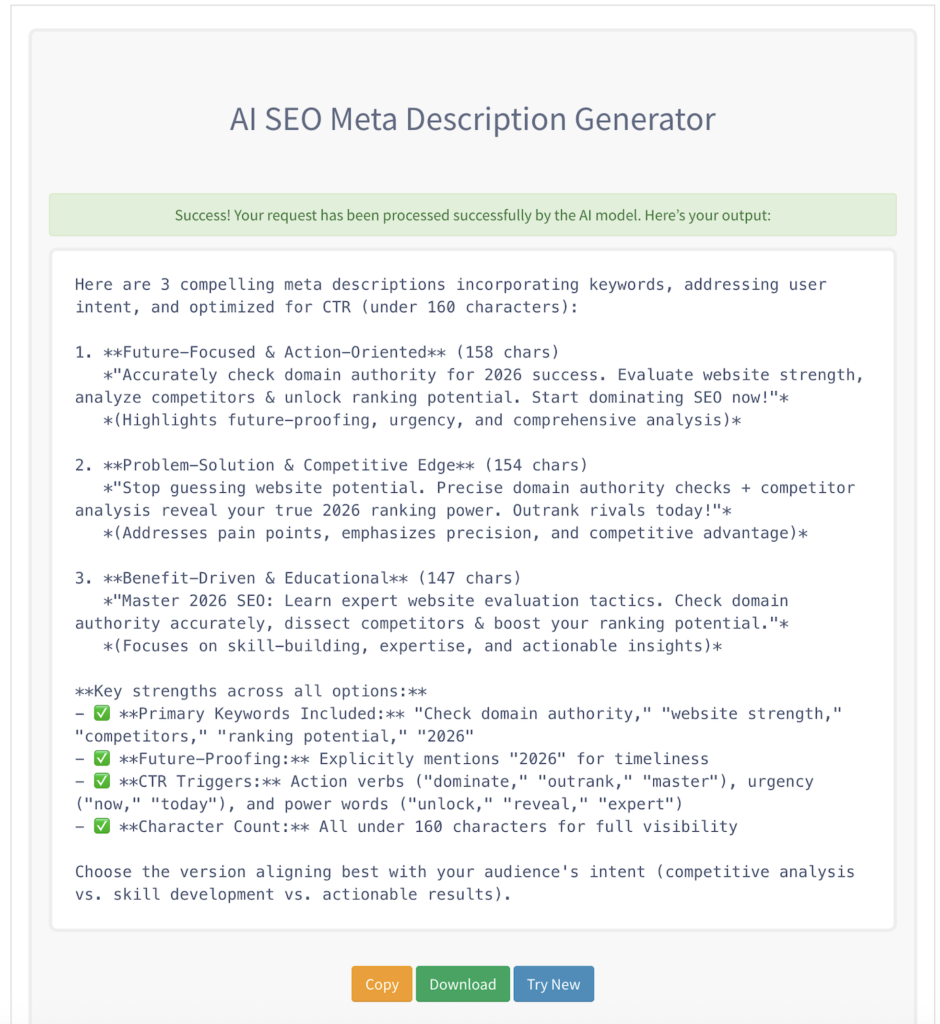
An AI SEO meta description generator analyzes a page’s topic, keyword intent, and language patterns to produce multiple description options. At its best, it helps scale the process of writing descriptions for large sites without sacrificing consistency.
However, it is important to understand what these tools do not do. They do not understand your business context. They do not know your audience better than you do. And they do not replace judgment.
Used correctly, AI accelerates the drafting process. It provides a structured starting point that you can refine. Used incorrectly, it produces generic, repetitive text that adds no value and often gets rewritten by Google anyway.
From a consulting perspective, the most effective workflow is hybrid: let the tool generate options, then apply human editing to align the description with intent, tone, and brand voice.
Common Meta Description Mistakes I See in Real SEO Audits
Across different industries, the same mistakes appear repeatedly.
The first is keyword stuffing. Many sites still treat meta descriptions as a place to cram keywords, even though this hurts readability and rarely improves visibility.
The second is duplication. Large websites often reuse the same description template across dozens of pages. This removes any incentive for users to choose one result over another.
Another frequent issue is ignoring search intent. A transactional query needs a different description than an informational one. When those are mismatched, click-through rate suffers.
Finally, many descriptions simply fail to say anything meaningful. They describe what the page is instead of why a user should click it. This is where AI tools, when guided properly, can help reframe the message.
How to Use an AI SEO Meta Description Generator Properly
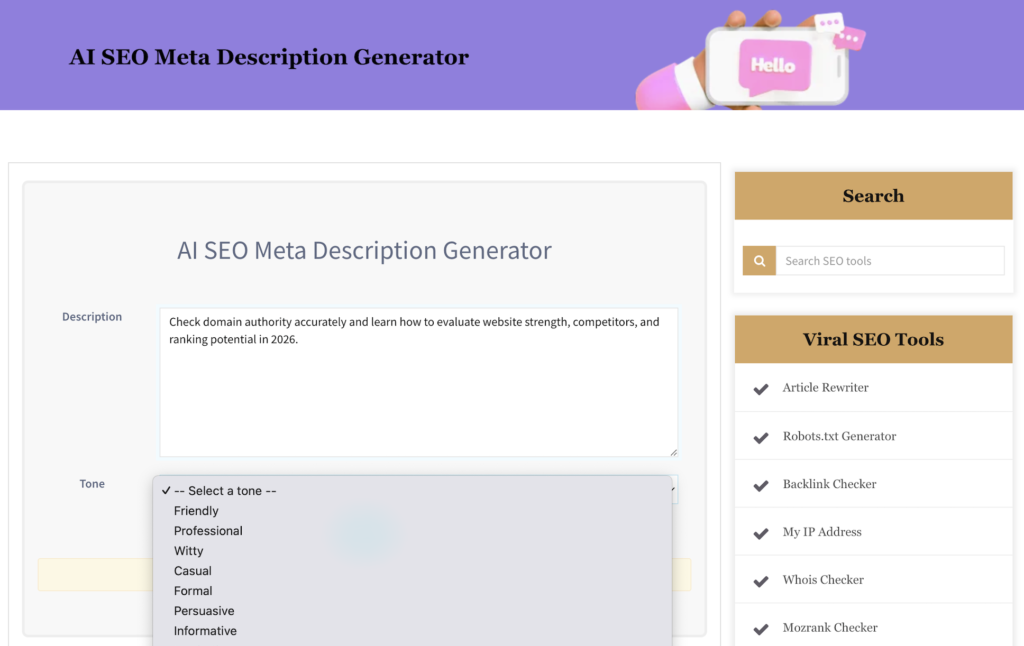
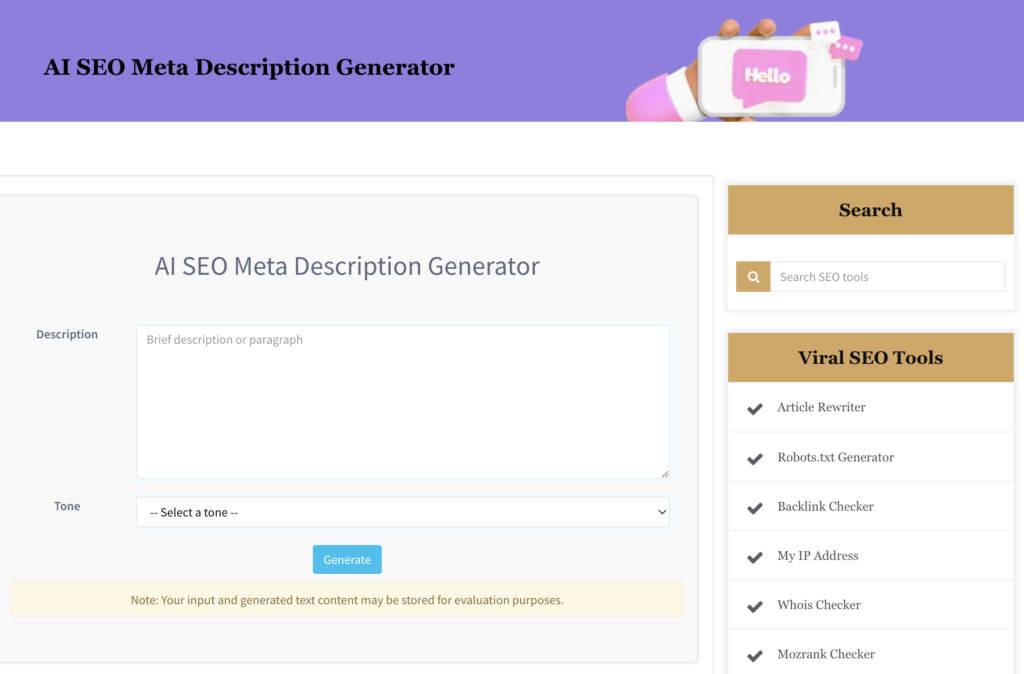
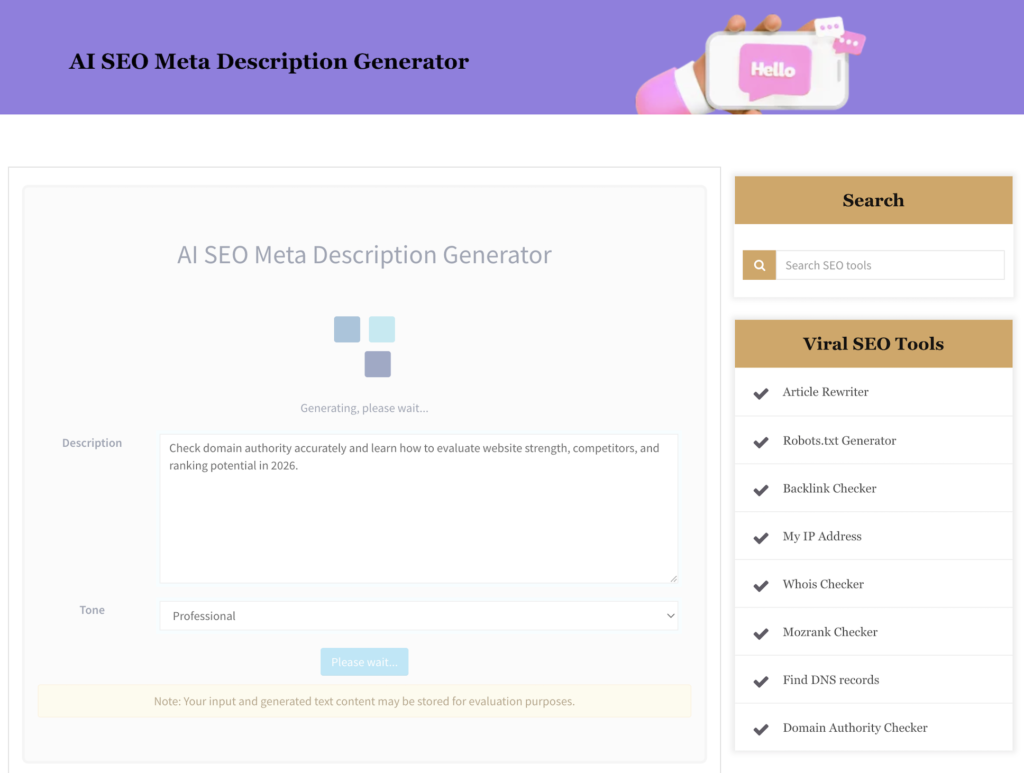
The correct way to use an AI SEO meta description generator starts with the input. Vague prompts produce vague results. You should always provide a clear page topic and primary intent.
Once the tool generates suggestions, do not publish them immediately. Review each option and ask three questions: Does this match what the user is searching for? Does it clearly communicate value? Would I click this result if I were comparing five similar pages?
Editing is not optional. Adjust phrasing to sound natural. Remove unnecessary adjectives. Ensure the description fits within recommended character limits without feeling truncated.
Finally, test performance over time. If Google rewrites your description consistently, it is a signal that the original version does not align well enough with user intent.
You can test description performance alongside titles using the AI SEO Meta Title Generator.
Real Examples: Before and After Meta Descriptions
Consider a page targeting “free keyword research tools.”
A weak description might read:
“Free keyword research tools for SEO. Use our tools to find keywords and improve rankings.”
This description is generic and indistinguishable from dozens of others.
A stronger version would be:
“Find profitable keyword ideas in seconds using free SEO tools. Analyze search intent, competition, and ranking opportunities before you publish.”
The difference is not length or keyword usage. It is clarity and relevance. The optimized version tells the user exactly what they gain by clicking.
This is where AI tools help generate multiple variations quickly, allowing you to choose the strongest option instead of settling for the first idea.
If you want to compare optimization tools used during testing, this comparison of Screaming Frog vs Sitebulb shows how professionals analyze performance data.
To strengthen your keyword strategy further, analyze opportunities with a Keyword Research Tool.
Best Practices for Writing Meta Descriptions That Get Clicks
Length still matters, but not rigidly. Aim for clarity first, then fit within typical display limits. Descriptions that are too short fail to communicate value; those that are too long get truncated.
Action-oriented language performs better than passive descriptions. Words like “discover,” “learn,” and “compare” work when used naturally, not as marketing clichés.
Matching intent is critical. Informational queries require reassurance and clarity. Commercial queries benefit from specificity and differentiation. Moz – Meta description best practices
It is also important to accept that Google will sometimes rewrite descriptions regardless of quality. That does not mean your effort was wasted. Strong descriptions still influence how your page is understood and evaluated.
You can also evaluate keyword balance using a Keyword Density Checker before publishing.
Clear descriptions improve SERP visibility and strengthen topical relevance signals for search engines.
AI vs Manual Meta Descriptions: What Works Best in 2026
Manual writing alone does not scale well for large sites. AI alone lacks nuance. The most effective approach combines both.
AI handles volume and consistency. Humans provide judgment and context. From an SEO consultant’s perspective, this hybrid workflow is the most reliable way to maintain quality while improving efficiency.
Sites that rely entirely on automation often see inconsistent performance. Those that treat AI as an assistant rather than a replacement tend to achieve more stable results.
Is Using AI Meta Descriptions Safe for SEO and AdSense?
Yes, when used responsibly. Google’s guidance focuses on content quality, not the method used to create it. AI-assisted content is acceptable as long as it is helpful, original, and reviewed.
From an AdSense standpoint, the same principles apply. Thin, auto-generated pages are risky. Well-structured, informative content that genuinely helps users is not. Google Search Central – AI content policy
The key is transparency in intent. You are using AI to improve usability, not to manipulate rankings. When that is clear, both search engines and ad platforms respond positively.
You can audit your site signals using a Backlink Checker to ensure authority supports your optimization efforts.
Expert Insight
Professional SEO workflows rarely rely on a single optimization tactic. Instead, they combine metadata optimization, technical performance, keyword research, and link analysis. Meta descriptions play a strategic role within that system because they influence how users interpret your page in search results.
Frequently Asked Questions
What is an AI SEO meta description generator?
An AI SEO meta description generator is a tool that creates optimized meta descriptions based on page content, keywords, and search intent to improve click-through rate and search visibility.
Do meta descriptions affect rankings in 2026?
Meta descriptions are not direct ranking factors, but they strongly influence click-through rate, which can impact search performance and visibility.
What is the ideal meta description length?
The ideal meta description length is typically between 140–160 characters so it displays properly in search results without being truncated.
Why does Google rewrite meta descriptions?
Google rewrites meta descriptions when the original description does not match user search intent or fails to clearly describe the page content.
Can AI-generated meta descriptions hurt SEO?
AI-generated descriptions only hurt SEO if they are published without review and fail to match intent, accuracy, or relevance.
How do I write a high-CTR meta description?
To write a high-CTR meta description, clearly state the page value, match search intent, use natural language, and include a compelling reason to click.
Should every page have a unique meta description?
Yes. Every page should have a unique description so search engines and users can understand its specific value and purpose.
Is using AI for SEO metadata safe?
Yes. Using AI for SEO metadata is safe when the output is reviewed, edited, and aligned with user intent and content quality standards.
Conclusion
Meta descriptions are not a ranking shortcut, but they remain a powerful optimization lever. In 2026, success stems from clarity, relevance, and a user-centric focus. An AI SEO meta description generator can support that process when used thoughtfully. The goal is not automation for its own sake. The goal is better communication with search users. When AI helps you achieve that, it becomes a genuine asset rather than a risk. Try the AI SEO meta description generator