

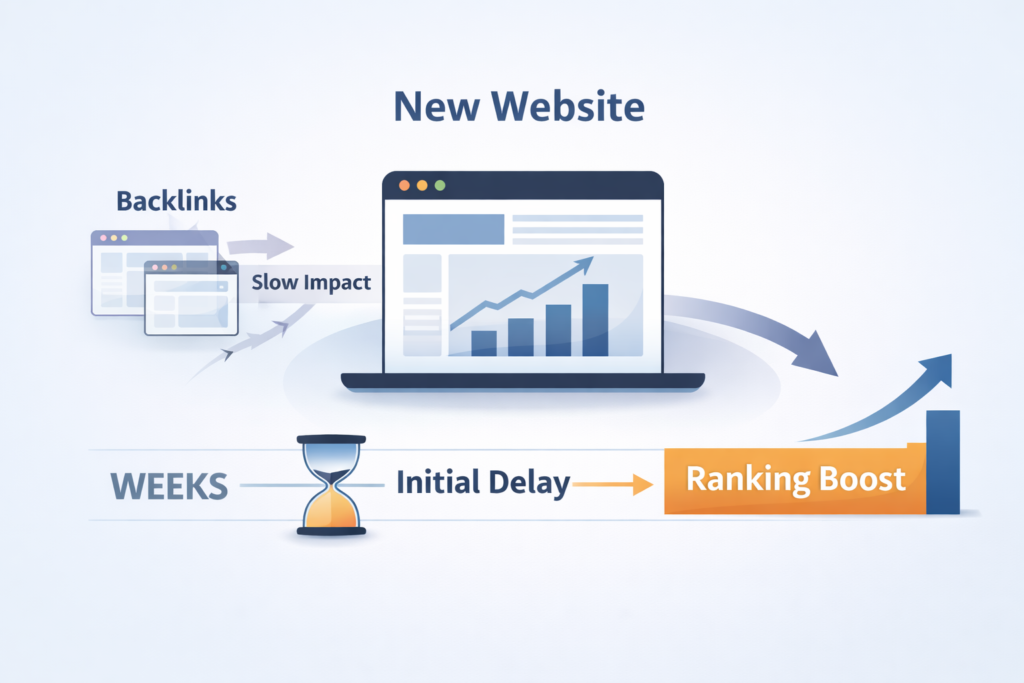
How long before backlinks affect ranking is one of the most important questions for new websites trying to grow traffic through SEO.
Quick Answer
For most new domains, backlinks start affecting rankings in 4 to 12 weeks, not in a few days. That timeline is normal. Google does not assign ranking value to a backlink the moment it discovers it. First, the link has to be crawled, indexed, evaluated for relevance and quality, and then tested against the trust level of the domain receiving it.
This explains clearly how long before backlinks affect ranking on a new website and why immediate results are rare.
That is why many new site owners build links, confirm that those links exist, and still see no movement in Google. The delay is usually not a sign that backlinks are useless. It is a sign that the website is still inside the evaluation window.
Quick Summary
- New websites usually need 4 to 12 weeks before backlinks influence rankings
- Backlink discovery is not the same as backlink impact
- Google evaluates quality, context, trust, and consistency
- New domains experience a longer delay than established sites
- Strong internal linking and topical relevance can shorten the delay
Symptoms: What You Usually See Before Backlinks Start Working
The early-stage pattern is usually easy to recognize if you know what to look for. On a new site, the signs often appear in this order:
- a backlink is published
- a third-party SEO tool detects it
- Google eventually crawls it
- impressions begin to rise slowly
- rankings remain flat for days or weeks
- then movement appears suddenly rather than gradually
At this stage, many site owners start questioning how long before backlinks affect ranking, even though the delay is part of normal evaluation.
Here is a real example from my Google Search Console where backlinks were already detected, but rankings and clicks did not improve immediately.
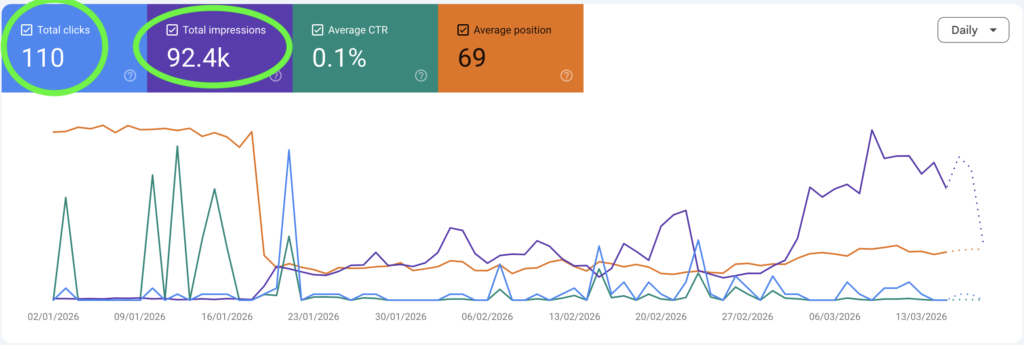
You can see impressions increasing while clicks remain low — this confirms that backlinks are discovered first, but their ranking impact is delayed.
This is where many site owners make the wrong conclusion. They think the backlink failed. In reality, Google often needs more time to decide whether that backlink deserves ranking influence.
In practical terms, the common measurable signals are:
| Signal | What You See | What It Usually Means |
|---|---|---|
| Backlink visible in tool | Link appears quickly in Ahrefs/Semrush-like tools | Discovery by external crawler, not ranking impact |
| No position change | Keyword stays in same range | Evaluation still incomplete |
| Impressions rise slowly | Page is entering search testing | Google is collecting behavioral and relevance data |
| GSC link report delayed | Link not shown yet in Search Console | Reporting lag is normal |
| Sudden ranking jump | Page moves after long silence | Signal evaluation finished |
On new domains, this lag is more visible because there are fewer trust signals supporting the page.
Decision Block: Delay or Real SEO Problem?
Not every ranking delay is normal. Some are caused by weak links, poor structure, or poor page quality. The correct diagnosis matters.
| Situation | Likely Explanation | What To Do |
|---|---|---|
| Backlink exists but page is not indexed | Crawl or indexing issue | Fix indexability first |
| Backlink is indexed but ranking does not move | Normal delay or weak signal | Wait and optimize supporting signals |
| Ranking improves briefly then drops | Testing phase or weak page quality | Improve content depth and structure |
| No movement after 10–12 weeks | Link quality or page relevance problem | Run full audit |
| Competitor pages keep outranking you | Trust gap or stronger entity signals | Improve topical authority and backlinks |
If the backlink itself still has indexing problems, connect this article naturally to why backlinks are not indexed and how to fix it. That page supports the diagnosis before you blame the ranking delay.
How Long Before Backlinks Affect Ranking for New Websites: The Real Sequence
The reason this topic confuses so many people is simple: most SEO discussions stop at backlink creation, while ranking depends on what happens after that.
The real process looks like this:
- Discovery
Google finds the linking page or the destination page through crawling. - Indexing
The linking page and the link relationship are processed and stored. - Evaluation
Google evaluates whether the linking page is relevant, credible, and contextually useful. - Trust Assignment
Google decides how much weight the link deserves for the receiving domain. - Ranking Impact
The page may begin to move if enough supporting signals align.
That sequence explains why the same backlink may affect an established domain quickly but do almost nothing for a new website in the first weeks.
AI Search Summary: Why the Delay Happens
Backlinks do not act like a switch. They act like a signal that needs validation.
This is exactly why understanding how long before backlinks affect ranking is critical for setting realistic SEO expectations.
For a new website, Google needs to answer several questions before allowing the backlink to influence rankings:
- Is this site consistent enough to trust?
- Does the linked page deserve visibility?
- Is the linking page contextually related?
- Does the backlink pattern look natural?
- Does the site have enough supporting topical content?
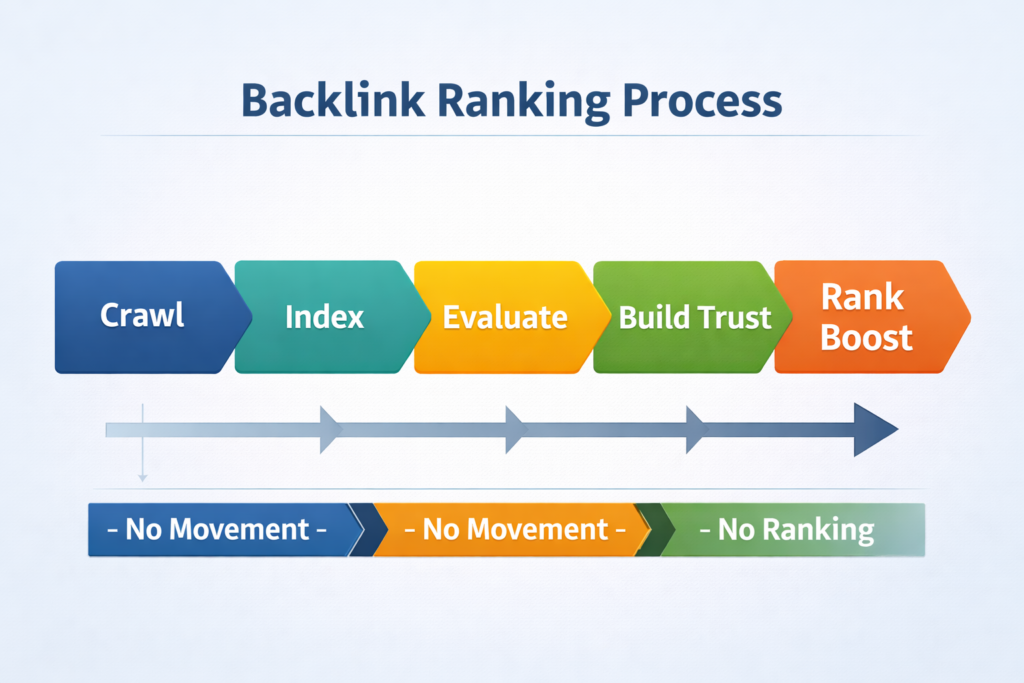
That is why ranking delay is not only about the backlink. It is also about the site receiving the backlink.
Introduction
How long before backlinks affect ranking for new websites is one of the most misunderstood questions in SEO because the visible timeline is usually slower than people expect. On a new domain, I have seen pages get backlinks, receive impressions, and still remain stuck for weeks before any meaningful ranking improvement appears. The key issue is not whether the link exists. The key issue is whether Google has assigned enough trust and relevance to let that link influence the page.
Most new site owners expect cause and effect to be immediate. They publish a guest post, get a mention, or acquire a contextual link and then check rankings every day. That is the wrong expectation. In most cases, backlinks on new domains behave like delayed SEO signals, not instant ranking triggers.
Experiment: What the Timeline Usually Looks Like on a New Domain
To understand the delay clearly, think in terms of a practical SEO experiment.
Initial setup
- new domain with low trust history
- low-competition target query
- one core page and two supporting pages
- several contextual backlinks built over a short period
- internal links added from relevant articles
Expected result
Most people expect rankings within 7–14 days because the backlink already exists publicly.
Actual result
What usually happens is different:
| Week | Typical Outcome | Interpretation |
|---|---|---|
| Week 1 | Link published, sometimes crawled | No ranking effect yet |
| Week 2 | Early indexing signals | Still too early |
| Week 3–4 | Impressions may begin rising | Evaluation phase |
| Week 5–8 | First ranking shifts possible | Trust signals strengthening |
| Week 8–12 | More stable impact | Link influence becomes clearer |
The experiment clearly shows how long before backlinks affect ranking depends more on trust signals than on link timing alone.
That is why SEO on new sites feels slow even when the direction is correct.
Observation: Why Some Backlinks Work Faster Than Others
Not all backlinks move rankings at the same speed. The delay depends on the structure of the signal.
In many cases, what looks like slow progress is simply the normal phase of how long before backlinks affect ranking on a new domain.
Faster-impact backlinks usually have:
- strong topical relevance
- editorial placement inside the main content
- a credible source page
- natural anchor context
- a destination page that already answers the query well
Slower-impact backlinks usually have:
- weak topical relation
- low-authority source pages
- generic anchors
- thin destination content
- no supporting internal links
This is the point where many site owners focus only on quantity. That is a mistake. Ten weak backlinks can still produce less movement than one strong contextual mention placed on a trusted page.
To reinforce that evaluation layer, this blog can naturally point to backlinks indexed but no ranking impact explained, because indexing without influence is exactly the confusion most people experience.
Ranking Delay Pattern: What Changes on New Websites
New websites face a structural disadvantage: Google has limited historical evidence about them. That matters.
The delay you see is directly tied to how long before backlinks affect ranking on low-trust domains.
Why the delay is longer on new sites
1. Low domain trust
A new domain has not yet proven consistency, stability, or expertise. That makes Google more conservative when applying external ranking signals.
2. Weak topical reinforcement
If the target page sits alone without support from related pages, the backlink has less context to amplify.
3. Low crawl frequency
Fresh sites are often crawled less aggressively than established websites, so re-evaluation takes longer.
4. Thin internal signal flow
A backlink pointing to one page is stronger when the rest of the site supports that topic through clear internal structure.
That is why a page may receive a backlink yet remain slow to move if the site around it is still weak.
This is also where a contextual internal link to internal links not improving ranking fix guide becomes highly relevant, because backlinks and internal links work best together, not separately.
What Affects How Fast Backlinks Start Working?
This section is important for ranking because it captures secondary search intent around the main query.
Several factors influence how long before backlinks affect ranking, including content quality, relevance, and internal support signals.
Content quality of the destination page
If the destination page is average, a backlink has less to amplify. A weak page rarely turns into a strong ranking asset just because it receives a link.
Relevance of the linking page
A backlink from a closely related page usually carries more useful context than a random mention on an unrelated site.
Placement of the link
Editorial links inside the body content tend to be stronger than footer, author bio, or low-visibility links.
Existing page signals
If the page already gets impressions and partial visibility, a backlink may accelerate movement faster than on a page with no signals at all.
Website structure
A site with supporting pages, cluster coverage, and proper internal distribution helps Google interpret the destination page more confidently.
To build that support layer, a natural tool mentioned here is AI Keyword Cluster Ideas, which helps create surrounding topic coverage instead of leaving one page isolated.
Practical Framework: How To Reduce the Delay
You cannot force Google to trust a new domain quickly, but you can remove the conditions that slow evaluation.
Step 1: Confirm that the linked page is indexable
Before expecting a ranking benefit, make sure the destination page is:
- crawlable
- indexable
- internally linked
- not canonicalized elsewhere
- not blocked or weakly discoverable
A good contextual tool mentioned here is Google Index Checker to verify whether the destination page is properly visible in Google’s index.
I analyzed my page using my own link analyzer tool to understand how internal and external links support backlink performance.
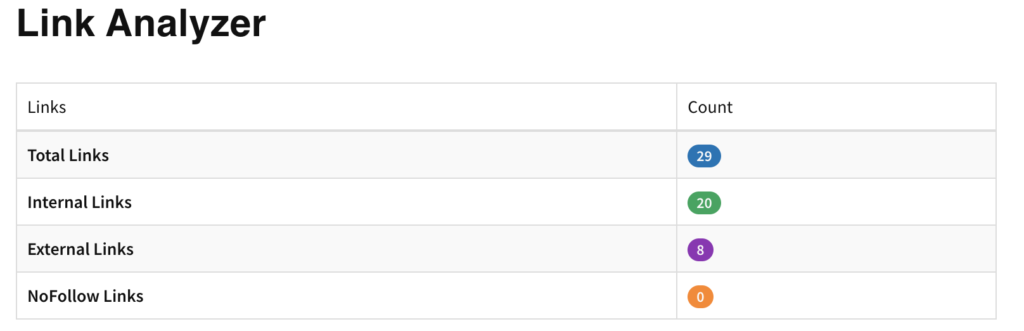
This shows that even with multiple links, structure and placement matter more than quantity when it comes to ranking impact.
Step 2: Check backlink quality, not just existence
A published link does not automatically mean a useful link. Review:
- source page quality
- anchor relevance
- surrounding paragraph context
- whether the link is actually crawlable
- whether the linking page itself is indexed
This fits naturally with Backlink Checker Toot, because you need to review the backlink profile before you judge performance.
Understanding how long before backlinks affect ranking helps you focus on link quality instead of reacting too early.
Step 3: Strengthen internal reinforcement
If a page receives backlinks but the rest of the site does not support the same topic, the signal remains isolated. Add internal links from relevant content and keep the topic cluster coherent.
Step 4: Improve crawl consistency
New domains often suffer from weak discovery patterns. A related internal article, such as what is crawl budget in SEO helps explain why crawl frequency slows evaluation cycles on fresh sites.
Step 5: Build supporting pages around the topic
The more clearly the site demonstrates topical depth, the easier it becomes for Google to understand that the page deserves ranking support.
Technical Insight: Why Indexing Is Not the Same as Ranking Impact
This is where many blogs stay too shallow, so this section matters.
Google does not treat backlinks as binary signals. A link is not simply “working” or “not working.” Instead, the system evaluates layers such as:
| Signal Layer | What Google Needs To Understand |
|---|---|
| Link quality | Is the source credible enough? |
| Topical relevance | Does the source context match the destination topic? |
| Placement quality | Is the link editorial and meaningful? |
| Domain trust | Is the receiving site credible enough to benefit? |
| Content support | Does the destination page deserve stronger visibility? |
So when someone says, “My backlink is live, why am I not ranking?”, the real answer is usually this: the link exists, but the full signal has not yet been validated, distributed, and trusted.
Here is an example of backlink data showing referring domains, authority, and link signals from an SEO tool.
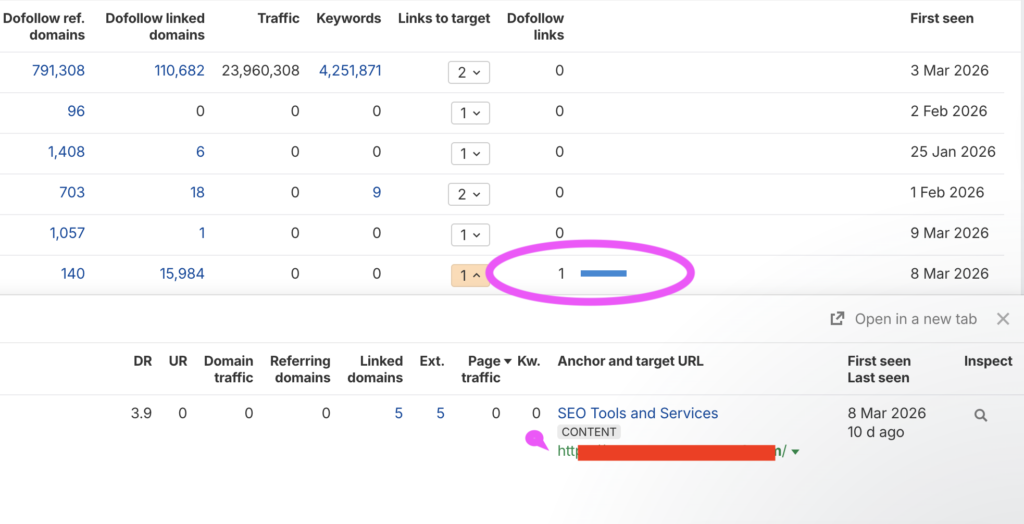
This explains why not all backlinks move rankings — Google evaluates authority, relevance, and context before assigning value.
For external authority support, this section can naturally reference Google Search Central documentation on crawlable links and the Google SEO Starter Guide as the two most relevant outbound resources.
How Long Before Backlinks Affect Ranking for New Websites Compared With Older Sites?
This comparison helps because many people see competitors move faster and assume they did something wrong.
| Website Type | Typical Backlink Impact Window | Reason |
|---|---|---|
| New website | 4–12 weeks | Low trust and slower re-evaluation |
| Growing website | 3–8 weeks | Some authority already exists |
| Established site | 1–4 weeks | Strong historical trust and faster interpretation |
The same backlink can behave differently depending on the maturity of the domain receiving it. That is why copying another site’s backlink plan does not always produce the same timeline.
Final Insight
The biggest mistake in backlink SEO for new websites is not building bad links first. It is expecting good links to behave too quickly.
A new domain usually does not fail because backlinks are absent. It fails because the site owner judges backlink performance before Google has finished evaluating the full picture. On fresh domains, ranking impact is delayed by trust, structure, context, and crawl behavior. That delay is frustrating, but it is normal.
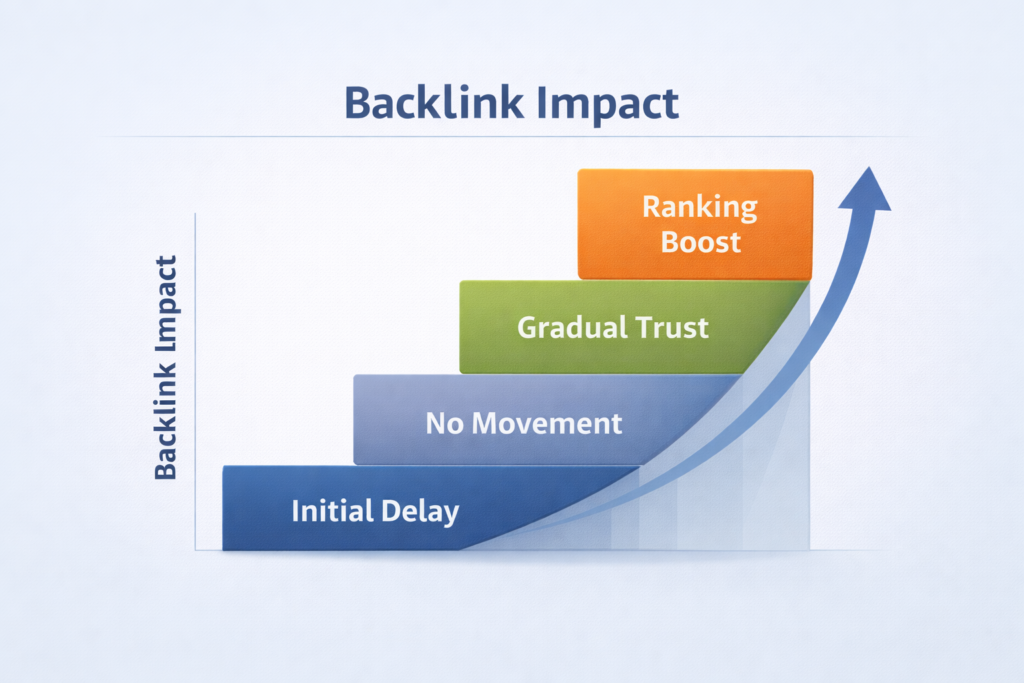
The practical rule is simple:
Backlinks help new websites when three things align at the same time:
- the link is relevant and indexable
- the destination page is strong enough to deserve visibility
- the website provides supporting topical and internal signals
When those conditions are missing, backlinks feel slow. When those conditions are present, backlinks often trigger movement in waves rather than in a steady line. That pattern is normal, and understanding it protects you from making the wrong SEO decisions too early.
In reality, how long before backlinks affect ranking depends on how quickly Google can validate trust and relevance across the entire site.
FAQs
How long before backlinks affect ranking for new websites?
For most new websites, backlinks start affecting rankings within 4 to 12 weeks. The exact speed depends on link quality, topical relevance, crawl frequency, and the trust level of the receiving domain.
Why do backlinks take so long to affect rankings on a new website?
Backlinks take longer on new websites because Google first needs to evaluate the linking page, the destination page, and the credibility of the domain receiving the link. New sites have less historical trust, so ranking influence is usually delayed.
Do backlinks work after indexing?
Not automatically. Indexing only confirms that Google has processed the page or the link relationship. It does not confirm that the backlink is already influencing rankings.
Can backlinks be indexed but still not help rankings?
Yes. A backlink can be indexed and still have little or no ranking effect if it comes from a weak page, lacks topical relevance, sits in a poor placement, or points to a page that is not strong enough to compete.
How fast do backlinks affect SEO if the website is already established?
Established sites often see backlink impact faster, sometimes within 1 to 4 weeks, because Google already trusts the domain and can assign link value more confidently.
What makes backlinks work faster for a new domain?
The most important accelerators are:
- strong contextual backlinks
- high-quality destination content
- clear internal linking
- topic cluster support
- consistent indexing and crawlability
Should I build more backlinks if rankings do not move after two weeks?
Usually no. Two weeks is too early for most new domains. It is better to review page quality, internal linking, and backlink relevance before increasing volume.
How do I know whether the delay is normal or a problem?
If the page is indexed, impressions exist, and the backlink is real, some delay is normal. If nothing changes after 10–12 weeks, then the issue may be weak content, weak backlinks, or poor site structure.
Conclusion
Backlink timing is not immediate, and that is especially true for new websites. The right expectation is not “I built links, so rankings should move tomorrow.” The right expectation is that backlinks need time to be discovered, interpreted, trusted, and reinforced by the rest of the site.
If your page is good, the backlinks are relevant, and the site structure supports the topic, ranking improvement can happen. But on a new domain, it usually happens after an evaluation period, not instantly. That is the real answer to the question, and it is the expectation that leads to better decisions.
If you understand how long before backlinks affect ranking, you avoid making premature SEO decisions that slow long-term growth.