

When people discuss SEO authority, they typically focus on domains. However, in practice, individual pages are what rank in Google, not entire websites. Two pages on the same site can perform very differently, even if the domain authority is identical.
In 2026, understanding page-level strength is more important than ever. Google evaluates pages individually based on relevance, links, content quality, and overall usefulness. A strong page can rank even on a weak domain, while a weak page can fail on a strong one.
A Page Authority Checker that evaluates individual page strength and SEO potential helps you estimate how strong a specific page is from an SEO perspective and whether it can realistically compete in search results. It does not predict rankings or guarantee results, but it gives you a realistic signal of how competitive a page might be and where improvement is needed.
This guide explains what page authority means, how a Page Authority Checker works, how to use it correctly, and how to act on the results to improve SEO performance.
What a Page Authority Checker Tool Is
A Page Authority Checker is an SEO tool that evaluates the relative strength of an individual webpage based on multiple SEO signals, primarily link-related factors.
For a widely recognized industry perspective, you can also review the Page Authority explanation by Moz, which explains how page-level link signals are modeled to estimate relative ranking strength.
Page authority is a comparative metric, not an absolute score. It helps answer questions such as:
- How strong is this page compared to others?
- Is this page competitive for search results?
- Which pages need more SEO work?
This tool is useful for:
- SEO beginners learning page-level optimization
- Bloggers evaluating article strength
- SEO professionals analyzing competitors
- Website owners prioritizing SEO efforts
It is important to understand that page authority is not a Google metric. It is an estimation designed to help decision-making, not a direct ranking factor.
Why Page Authority Matters More in 2026
SEO has shifted from domain-level dominance to page-level relevance.
Page-Level Ranking Focus
Google ranks pages, not websites. A single high-quality page can outperform an entire domain.
According to Google’s own documentation on how Google ranks web pages, search systems evaluate individual URLs based on relevance, usefulness, and signals tied to that specific page—not just the overall domain.
AI-Driven Evaluation
Modern search systems analyze content usefulness and link context at the page level.
Internal Competition
Large sites often compete with themselves. Page authority helps identify which pages deserve optimization.
Smarter SEO Strategy
Instead of spreading effort evenly, page authority allows focused improvement where it matters most.
In short, page authority helps you work smarter, not harder.
How a Page Authority Checker Works
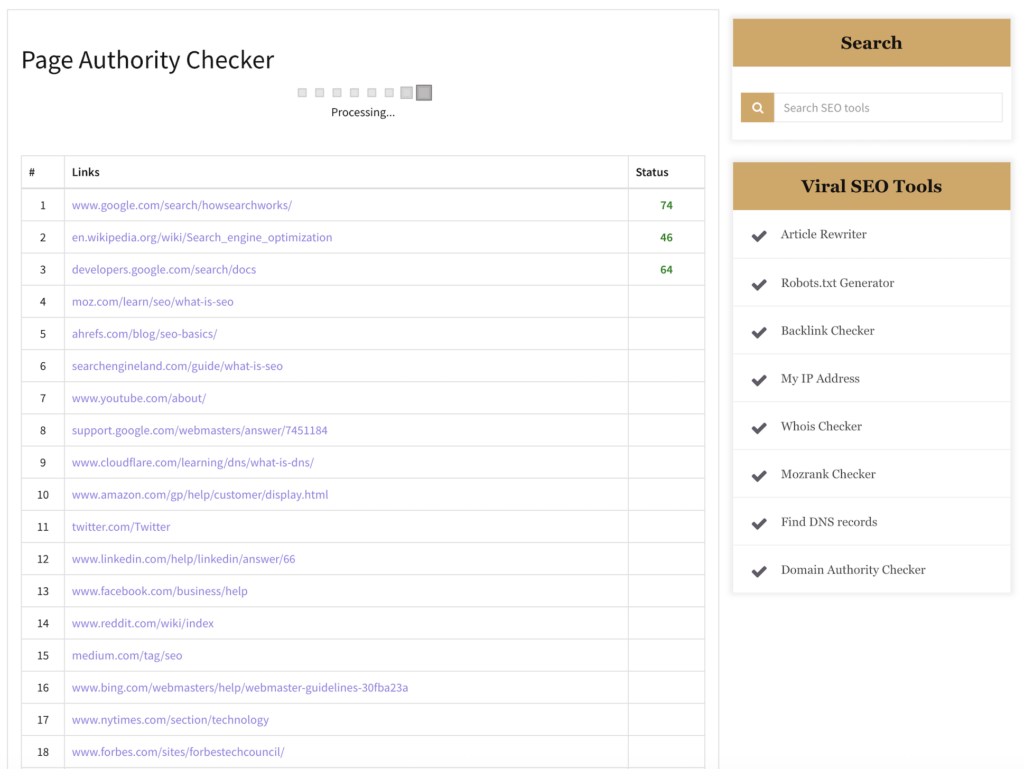
A Page Authority Checker analyzes publicly available signals related to a specific URL.
Typically, it evaluates:
- Quality and quantity of backlinks pointing to the page, which you can evaluate in detail using a Backlink Checker that analyzes referring domains, link strength, and relevance
- Link diversity and relevance
- Overall link strength distribution
- Relative competitiveness compared to other pages
What it can do:
- Estimate page strength
- Compare pages objectively
- Help prioritize SEO tasks
What it cannot do:
- Predict exact rankings
- Replace keyword research
- Guarantee SEO success
Page authority should always be used as guidance, not as a final decision-maker.
How to Use a Page Authority Checker Correctly
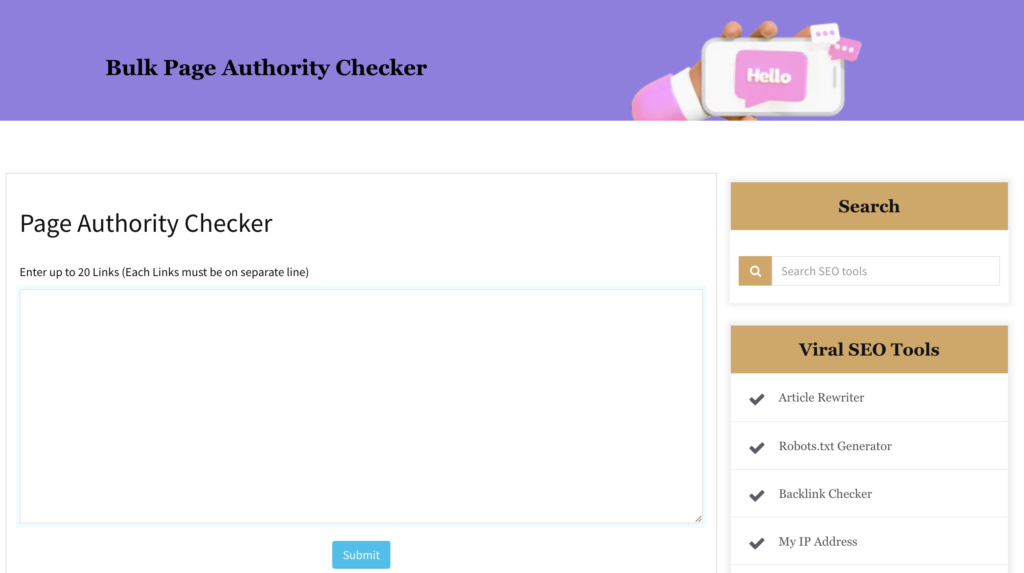
Using the tool properly prevents misinterpretation.
Step 1: Enter the Page URL
Use the exact URL of the page you want to analyze. Avoid homepage URLs unless that is your intent.
Step 2: Run the Check
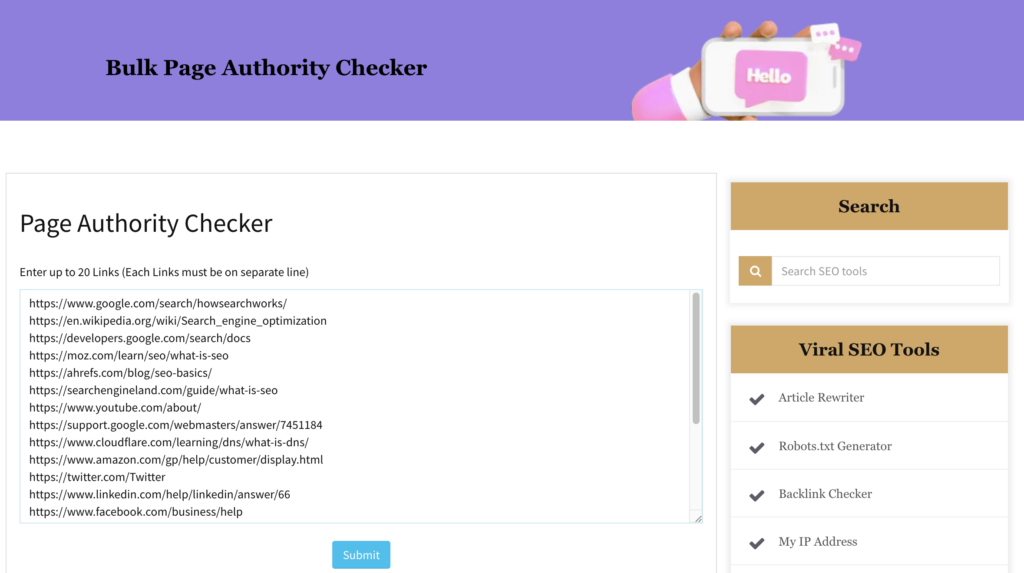
Allow the tool to analyze the page and return a score or strength indicator.
Step 3: Interpret the Result
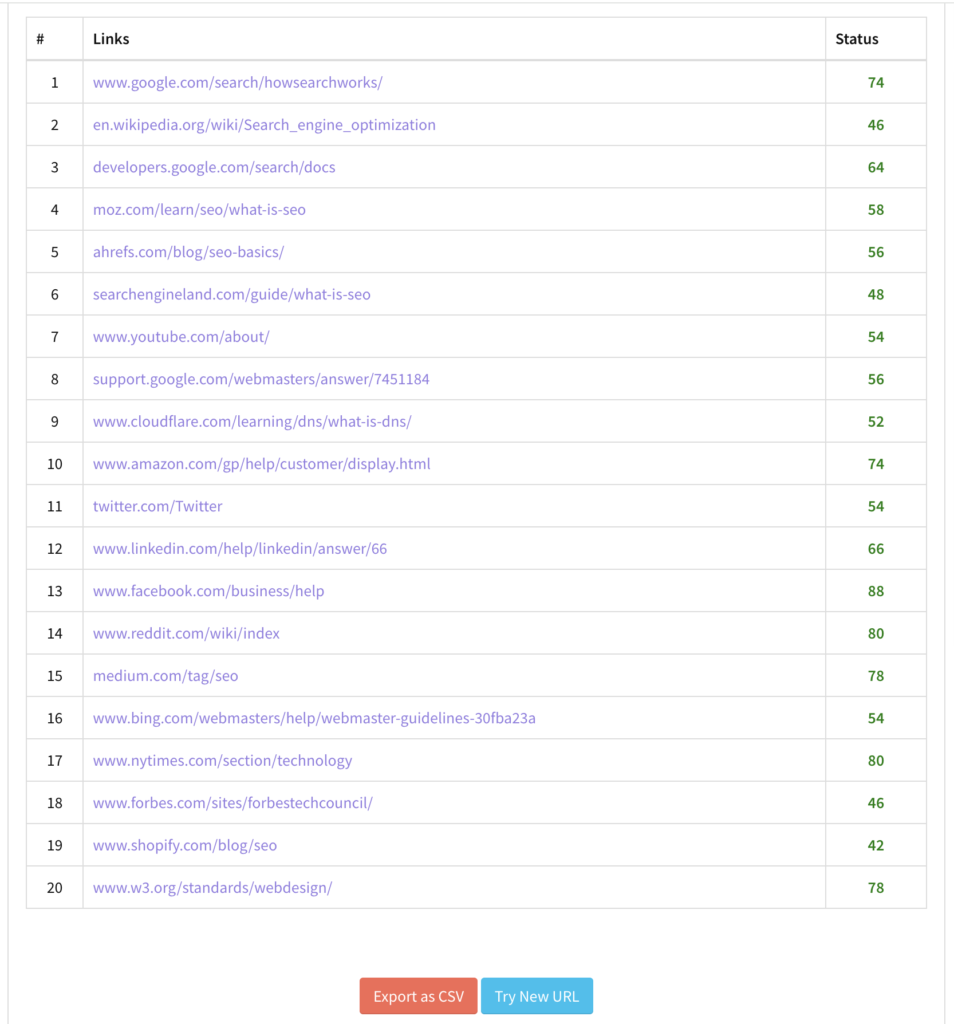
- Higher scores indicate stronger pages
- Lower scores indicate pages that need improvement
- Compare results with competitors, not in isolation
A low score does not mean failure. It means opportunity.
Key Features of a Reliable Page Authority Checker
A good Page Authority Checker focuses on clarity and usability.
Useful features include:
- Page-specific analysis (not domain-only)
- Clear scoring or strength indicators
- Fast results
- No forced account creation
Avoid tools that promise rankings or exaggerate accuracy.
Common Reasons Pages Have Low Authority
Low page authority usually has clear causes.
Few or Weak Backlinks
Pages without links struggle to build authority.
Poor Internal Linking
Important pages buried deep in site structure lose strength.
Thin or Low-Value Content
Content that lacks depth attracts fewer references.
New Pages
Fresh pages naturally start with low authority.
Page authority grows over time with consistent effort.
What to Do If a Page Has Low Authority
A low score is not a problem—it is a signal.
Improve Content Quality
Add depth, clarity, examples, and real value.
Strengthen Internal and External Links
Use a Link Analyzer that evaluates internal and external linking structure to improve how authority flows to the page.
Earn Natural Backlinks
Promote useful content through outreach and sharing.
Be Patient
Authority grows gradually. Avoid shortcuts.
Chasing metrics without improving real value rarely works.
Page Authority vs Domain Authority
These metrics serve different purposes.
- Measures individual page strength
- Useful for content-level decisions
- Helps prioritize SEO work
- Measures overall site strength
- Useful for competitive analysis
- Does not reflect page performance directly
Both metrics are useful when used together, not separately.
Who Should Use a Page Authority Checker
This tool is especially helpful for:
- Bloggers optimizing individual posts
- SEO professionals analyzing competitors
- Affiliate marketers targeting specific pages
- Website owners managing large content libraries
Even small sites benefit from understanding page-level strength.
Common Mistakes When Using Page Authority
Many users misuse the metric.
Common mistakes include:
- Treating page authority as a Google ranking factor
- Comparing scores across unrelated niches
- Ignoring content quality
- Obsessing over numbers instead of improvements
Page authority is a directional tool, not a scorecard.
Frequently Asked Questions
Is page authority a Google metric?
No. It is an SEO estimation used for analysis.
Does higher page authority guarantee rankings?
No. Rankings depend on relevance, intent, and quality.
How often should I check page authority?
Periodically, especially after major updates or link growth.
Can a new page rank with low authority?
Yes, if competition is low and the intent is well-matched.
Related SEO Tools and Guides
Page authority analysis works best when combined with:
Using multiple tools together leads to better decisions.
Conclusion
A Page Authority Checker is a practical SEO tool for understanding page-level strength. In 2026, SEO success depends less on domain size and more on how well individual pages perform.
This tool helps you identify which pages need attention, where to invest effort, and how to compete realistically. It does not replace strategy, but it supports it with clear signals.
Focus on improving content, links, and structure. Page authority will follow naturally over time.