
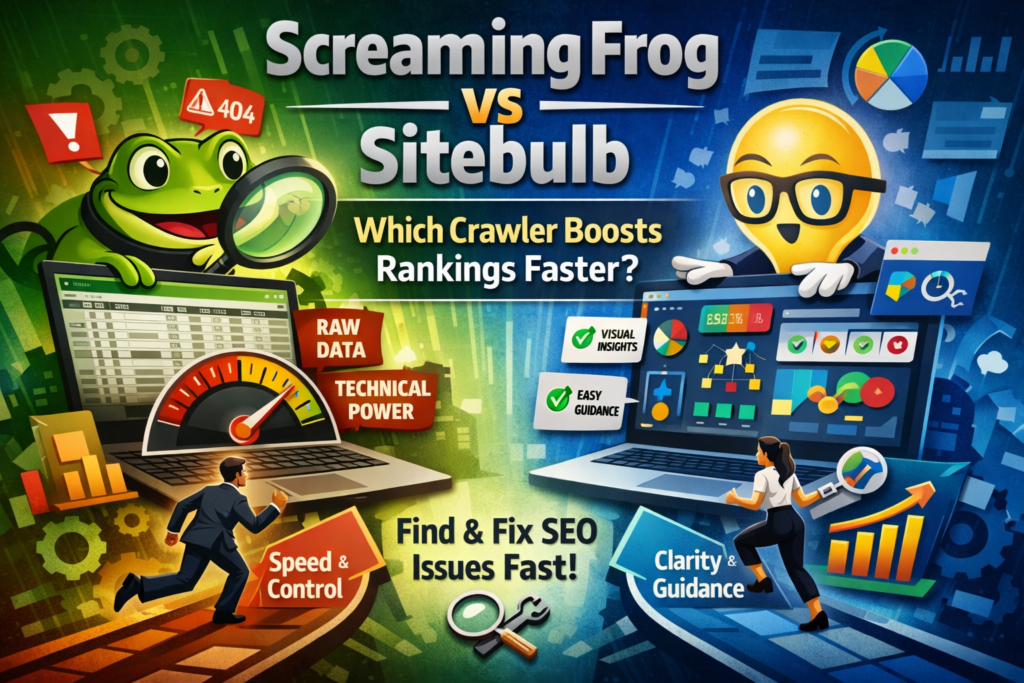
Screaming Frog vs Sitebulb is one of the most common technical SEO comparisons because both tools can crawl websites, detect issues, and support technical audits. The real difference is not whether they find problems, but how they present them, how fast you can work with them, and which one fits your workflow better. Screaming Frog is usually better for raw data and deep technical analysis, while Sitebulb is stronger for visual reporting and easier interpretation.
Most comparison articles stop at feature lists. That’s not useful. Rankings don’t improve because a crawler exists; they improve because problems get fixed. So the real comparison is simple:
Which crawler helps you find problems faster, understand them clearly, and fix them correctly?
This complete Screaming Frog vs Sitebulb analysis breaks down real performance, accuracy, reporting logic, workflow efficiency, scalability, and ranking impact.
Quick Answer
Screaming Frog is usually the better choice for advanced SEO work, large-site crawls, and raw technical analysis. Sitebulb is better for easier reporting, visual explanations, and faster understanding for less technical users. If you want depth and control, choose Screaming Frog. If you want clarity and guided insight, choose Sitebulb.
Quick Verdict Snapshot
| Category | Winner |
|---|---|
| Speed | Screaming Frog |
| Ease of use | Sitebulb |
| Technical depth | Screaming Frog |
| Visualization | Sitebulb |
| Automation | Screaming Frog |
| Beginner usability | Sitebulb |
| Advanced SEO | Screaming Frog |
| Overall | Screaming Frog |
For most professionals comparing Screaming Frog vs Sitebulb, the decision becomes:
Data control vs guided insight
What an SEO Crawler Actually Does
To understand Screaming Frog vs Sitebulb, you first need to understand what crawlers influence in search performance.
For official guidance on how search engines crawl and index sites, review documentation from Google Search Central, which explains crawl behavior directly from the source.
An SEO crawler simulates how search engines scan your site and evaluates signals such as:
- internal linking structure
- status codes
- canonical rules
- duplicate content
- crawl depth
- redirect logic
- indexability signals
Before running a crawl, validate your directives using our Robots.txt Generator Tool to ensure bots can access the right pages.
Fixing problems in these areas improves:
- crawl efficiency
- indexing speed
- structural clarity
- ranking stability
Understanding crawl efficiency starts with proper allocation. Read our Crawl Budget in SEO Guide (2026) to learn how search engines prioritize URLs and why crawl waste hurts rankings.
Every serious Screaming Frog vs Sitebulb test shows the same reality:
ranking gains come from technical fixes, not the crawler itself.
The crawler only determines how fast you find those fixes.
Screaming Frog vs Sitebulb: Full Comparison
Screaming Frog Overview
When professionals discuss Screaming Frog vs Sitebulb, Screaming Frog is usually described as the technical benchmark.
It is built for precision and control. Instead of interpreting results for you, it exposes raw crawl data so you can analyze it yourself.
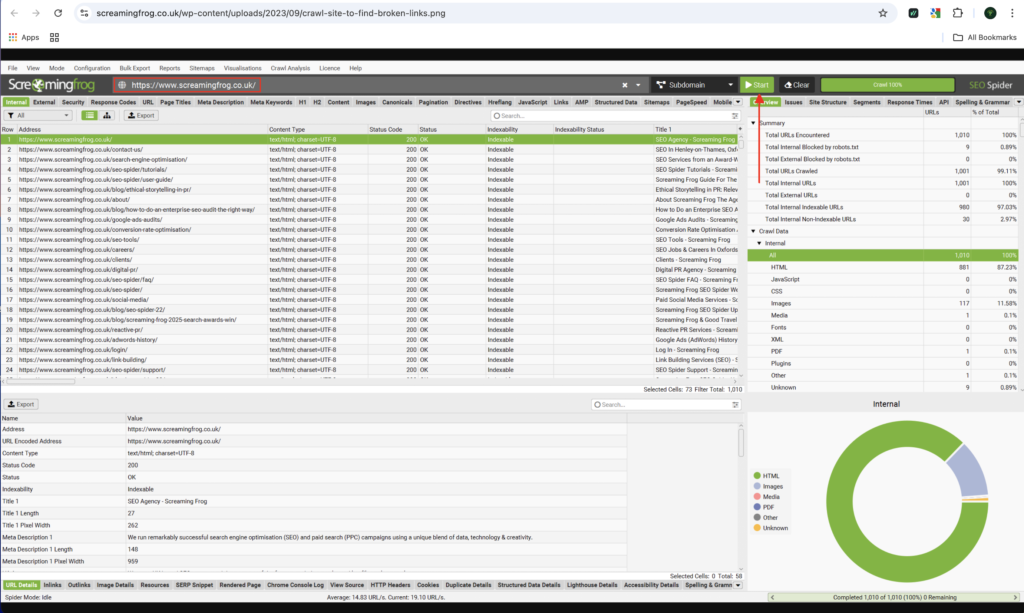
Strengths
- extremely fast crawling
- deep filtering options
- granular segmentation
- configurable crawl rules
- export flexibility
Weaknesses
- requires experience
- interface looks technical
- interpretation is manual
In most real-world Screaming Frog vs Sitebulb workflows, Screaming Frog is preferred by:
- technical SEOs
- agencies
- developers
- enterprise teams
The reason is simple: it exposes everything.
Sitebulb Overview
The opposite philosophy appears in Screaming Frog vs Sitebulb when examining Sitebulb.
Instead of showing raw datasets, Sitebulb analyzes crawl results automatically and explains them visually.
You can explore full technical capabilities and configuration details on Sitebulb, which outlines how its crawler interprets site data.
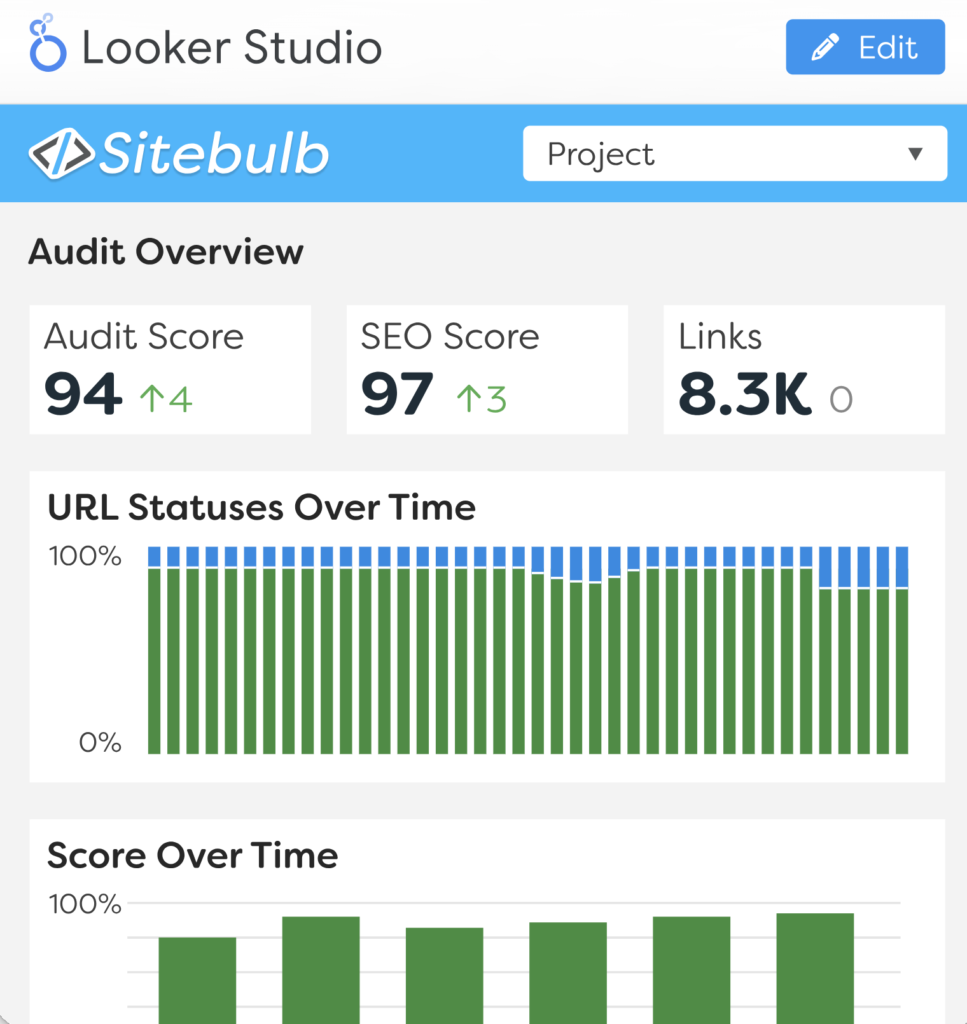
Strengths
- intuitive interface
- visual reports
- issue prioritization
- clear recommendations
Weaknesses
- slower crawls on large sites
- fewer advanced configurations
- less granular filtering
For beginners deciding between Screaming Frog vs Sitebulb, Sitebulb often feels easier immediately because it reduces interpretation effort.
It doesn’t just show problems — it explains them.
Detection Accuracy — Real Comparison
A fair Screaming Frog vs Sitebulb comparison must separate detection from presentation.
Detection capability is nearly identical.
Both tools find:
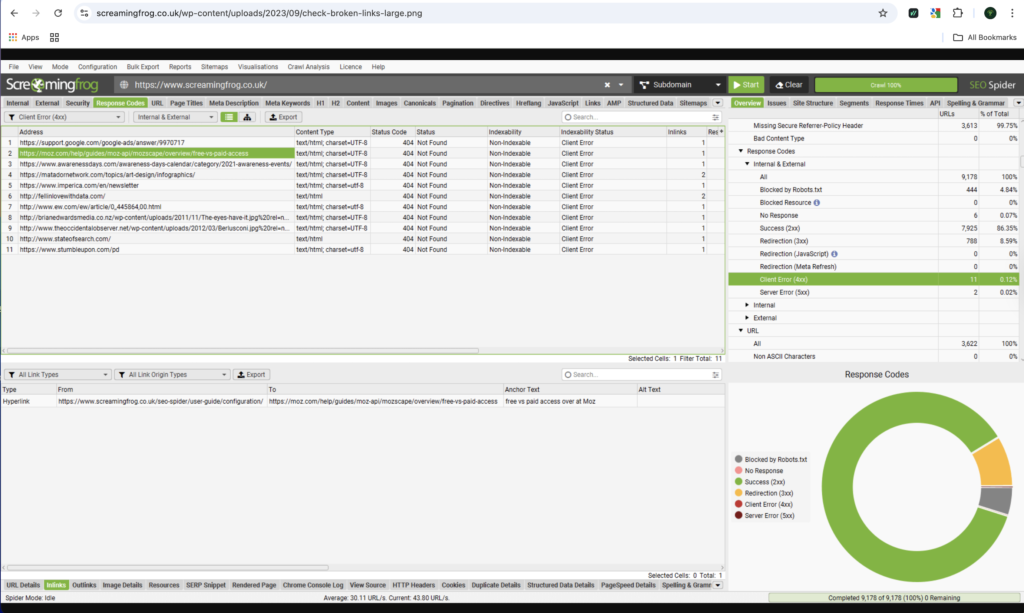
- broken links
- redirect chains
- duplicate content
- canonical errors
- orphan pages
- missing metadata
In side-by-side testing environments, accuracy differences are negligible.
If your site still struggles to appear in search, you may be facing indexing problems. See Indexed Not Submitted in Sitemap Fix Guide for practical diagnostics.
In some cases, the issue is not crawling but reporting delays, which are explained in Backlinks Not Showing in Google Search Console.
Where Screaming Frog vs Sitebulb actually differs is prioritization.
- Screaming Frog → shows all data equally
- Sitebulb → ranks issues by severity
That means neither crawler misses issues. They simply present them differently.
Crawl Speed Comparison
Speed is a decisive factor in Screaming Frog vs Sitebulb because faster crawls mean faster optimization cycles.
| Site Size | Faster Tool |
|---|---|
| Small sites | Tie |
| Medium sites | Screaming Frog |
| Large sites | Screaming Frog |
On large sites, Screaming Frog vs Sitebulb performance diverges noticeably. Screaming Frog processes URLs faster because it focuses on data collection first and visualization second.
Sitebulb renders visuals during scans, which slightly reduces speed but improves readability.
Screaming Frog vs Sitebulb Pricing in 2026
Pricing is often the deciding factor when evaluating Screaming Frog vs Sitebulb, especially for freelancers, consultants, and agencies managing multiple SEO projects.
Screaming Frog is generally the more cost-effective option for technical SEO professionals who want maximum control over crawl data. Its pricing model appeals to users who prioritize speed, custom configurations, advanced filtering, and large-scale website audits.
Sitebulb takes a different approach. While the overall cost is typically higher, the platform focuses heavily on usability, visual reporting, and automated issue prioritization. For many teams, the additional cost is offset by the time saved during analysis and reporting.
When comparing Screaming Frog pricing and Sitebulb pricing in 2026, the better value depends less on subscription cost and more on workflow efficiency.
If you already know how to interpret crawl data, Screaming Frog usually delivers stronger long-term value. If you prefer guided recommendations, visual explanations, and faster reporting, Sitebulb may provide a better return on investment despite the higher price.
| Pricing Factor | Better Choice |
|---|---|
| Lower entry cost | Screaming Frog |
| Better value for technical SEOs | Screaming Frog |
| Faster reporting and insights | Sitebulb |
| Easier client reporting | Sitebulb |
| Better value for agencies | Screaming Frog |
| Better value for beginners | Sitebulb |
For most advanced SEO workflows, Screaming Frog remains the stronger value proposition. For users who prioritize clarity, collaboration, and faster decision-making, Sitebulb remains a compelling alternative.
Reporting Philosophy — Raw Data vs Guided Insight
This is the core philosophical difference in Screaming Frog vs Sitebulb.
Screaming Frog reporting
- spreadsheet-style tables
- customizable filters
- full segmentation
- manual interpretation
Sitebulb reporting
- visual dashboards
- color-coded priorities
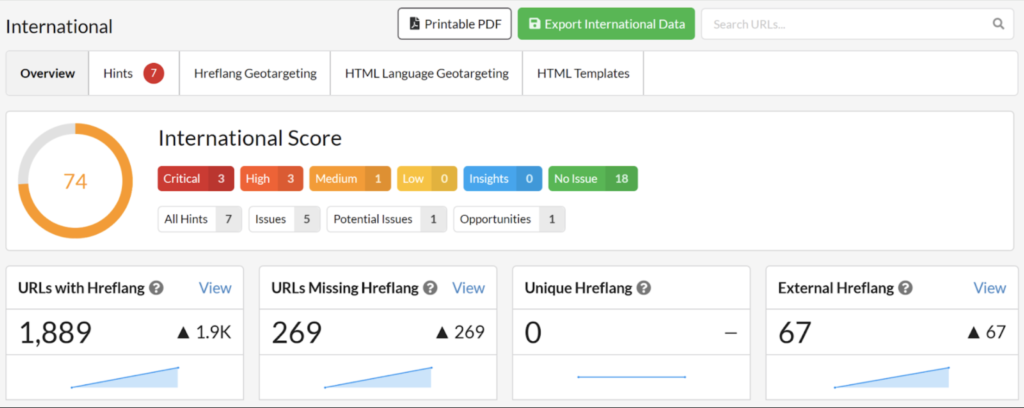
- built-in hints
- automated summaries
Professionals comparing Screaming Frog vs Sitebulb typically choose based on how they think:
| Thinking Style | Preferred Tool |
|---|---|
| Analytical | Screaming Frog |
| Strategic | Sitebulb |
Real-World Use Case Comparison
Theoretical comparisons don’t reveal much. Real scenarios do.
Large enterprise audit
Winner → Screaming Frog
Reason → faster segmentation + bulk analysis
Small website optimization
Winner → Sitebulb
Reason → clearer priorities
Agency environment
Winner → Screaming Frog
Reason → automation + exports
Most agencies deciding between Screaming Frog vs Sitebulb choose Screaming Frog because workflow speed matters more than interface simplicity.
Crawl Depth & Structural Analysis
Another overlooked part of Screaming Frog vs Sitebulb is crawl depth analysis.
Crawl depth affects how easily search engines discover important pages. Both tools calculate depth, but they present it differently.
Before investigating crawl depth issues, I often verify index coverage using a Google Index Checker.
Screaming Frog provides raw depth metrics.
Sitebulb visualizes site architecture.
Technical structure improvements become even stronger when paired with semantic signals. Our Structured Data Schema Markup Guide (2026) explains how to enhance crawl understanding.
Technical SEOs usually prefer raw depth numbers because they allow precise structural adjustments. Strategists often prefer diagrams because they simplify planning.
Again, the Screaming Frog vs Sitebulb choice depends on thinking style.
When Each Tool Performs Best
Understanding strengths is essential in any real Screaming Frog vs Sitebulb decision.
Screaming Frog performs best when
- auditing large sites
- running frequent scans
- testing migrations
- analyzing crawl paths
Sitebulb performs best when
- auditing occasionally
- training teams
- diagnosing problems quickly
- presenting reports to clients
So the best tool in Screaming Frog vs Sitebulb depends more on user context than tool capability.
Which Tool Should You Choose?
Choose Screaming Frog if you want full crawl control, deeper filtering, faster scans on larger sites, and more flexibility with exports. It is the stronger choice for technical SEOs, agencies, and users who already know how to interpret raw crawl data.
Choose Sitebulb if you want visual reports, easier issue prioritization, and a faster path from crawl results to decisions. It is the better choice for consultants, in-house teams, and users who prefer guided analysis over manual filtering.
For most advanced SEO workflows, Screaming Frog has the edge. For easier usability and cleaner reporting, Sitebulb is often the easier starting point.
Workflow Efficiency — The Real Ranking Factor
Efficiency determines SEO success. In long-term Screaming Frog vs Sitebulb testing, the crawler that fits your workflow always produces faster ranking improvements.
If you already know what to look for → Screaming Frog is faster.
If you want guidance → Sitebulb is faster.
Audits are only one part of technical SEO. Combine them with authority analysis using our Backlink Analysis Guide (2026) to prioritize fixes that actually impact rankings.
Keyword organization also plays a major role in technical performance, which is why many teams combine crawler audits with Keyword Cluster Ideas during site planning.
This is why experienced SEOs often say:
The best crawler is the one you understand best.
Feature Comparison Table
| Feature | Winner |
|---|---|
| Filtering | Screaming Frog |
| Visualization | Sitebulb |
| Customization | Screaming Frog |
| Ease of use | Sitebulb |
| Automation | Screaming Frog |
| Guidance | Sitebulb |
Feature comparisons alone never fully answer the Screaming Frog vs Sitebulb question. Workflow compatibility always matters more.
Limitations of Each Tool
An honest Screaming Frog vs Sitebulb comparison must include weaknesses.
Screaming Frog limitations
- overwhelming for beginners
- requires interpretation skill
- steep learning curve
Sitebulb limitations
- slower on massive sites
- fewer advanced configs
- less granular segmentation
Knowing these limits prevents choosing the wrong tool for your skill level.
Performance Over Time
Short tests don’t reveal long-term value. Extended testing does.
Tracking authority shifts alongside crawl fixes helps measure real progress. Use the Domain Authority Checker Tool to monitor improvement trends.
Over months of real-world use, Screaming Frog vs Sitebulb performance differences become clearer.
Screaming Frog becomes faster as users learn filters and shortcuts.
Sitebulb becomes faster as users rely on automated insights.
Both tools improve productivity — but in different ways.
Which Tool Helps You Fix SEO Issues Faster?
This is the most important part of any Screaming Frog vs Sitebulb comparison.
A crawler never improves rankings directly. Fixes do.
So the real metric is:
which tool helps you fix issues faster?
For experienced users → Screaming Frog
For beginners → Sitebulb
For agencies → Screaming Frog
Overall, most professional Screaming Frog vs Sitebulb evaluations give Screaming Frog a slight edge because deeper data enables faster diagnostics.
Pro Tips From Technical SEOs
Professionals who frequently compare Screaming Frog vs Sitebulb usually follow these principles:
- crawl weekly
- prioritize indexability issues
- fix structure before content
- segment before analyzing
Experts agree the tool matters less than consistency. But the right tool makes consistency easier.
Pricing Perspective
Another overlooked part of Screaming Frog vs Sitebulb is value perception.
Both tools are competitively priced. The real difference is time investment.
Screaming Frog costs more interpretation time.
Sitebulb saves analysis time.
So value depends on whether you prioritize control or speed.
Final Verdict — Screaming Frog vs Sitebulb
After extensive comparison and real-world testing:
Best for advanced SEO → Screaming Frog
Best for usability → Sitebulb
Best overall → Screaming Frog
Why?
Because ranking improvements come from fixing problems quickly. Screaming Frog’s speed and depth make it slightly stronger for experienced users. Sitebulb, however, can be faster for beginners because its reports are easier to understand.
FAQs
1. Which is better: Screaming Frog or Sitebulb?
For advanced technical SEO, Screaming Frog is usually the better choice because it offers faster crawls, deeper filtering, and greater control over crawl data. Sitebulb is often better for users who prefer visual reports, guided recommendations, and easier interpretation.
2. Is Screaming Frog faster than Sitebulb?
Yes. Screaming Frog generally crawls large websites faster because it focuses on data collection and analysis rather than visual rendering. The difference becomes more noticeable on larger websites with thousands of URLs.
3. Is Screaming Frog worth it in 2026?
Yes. Screaming Frog remains one of the most widely used technical SEO tools in 2026 because of its speed, flexibility, advanced crawl settings, and powerful export capabilities. It is particularly valuable for agencies, technical SEO specialists, and enterprise websites.
4. Is Sitebulb worth the price?
For many users, yes. Sitebulb provides visual reports, issue prioritization, and guided recommendations that can reduce analysis time. For consultants and in-house teams that value reporting clarity, the additional cost may be justified.
5. Can Screaming Frog and Sitebulb find the same SEO issues?
In most situations, yes. Both tools can detect crawl errors, redirect chains, broken links, duplicate content, canonical problems, and indexability issues. The primary difference is how the information is presented and prioritized.
6. Which SEO crawler is best for beginners?
Sitebulb is generally easier for beginners because it explains issues visually and prioritizes recommendations. Screaming Frog offers more control and flexibility but typically requires more technical experience.
7. Can SEO crawlers improve rankings?
Not directly. SEO crawlers identify technical issues that may affect crawling, indexing, and site performance. Rankings improve when those issues are properly fixed and optimized.
Final Verdict
Screaming Frog vs Sitebulb is not really a question of which crawler is universally better. It is a question of which workflow helps you find issues faster and act on them with more confidence. Screaming Frog is stronger for advanced users who want speed, flexibility, and deeper technical control. Sitebulb is better for users who want visual clarity, guided reporting, and easier interpretation.
For most experienced SEOs, Screaming Frog is still the stronger overall choice. For easier decision-making and faster understanding, Sitebulb remains a very strong alternative.