

Quick Answer
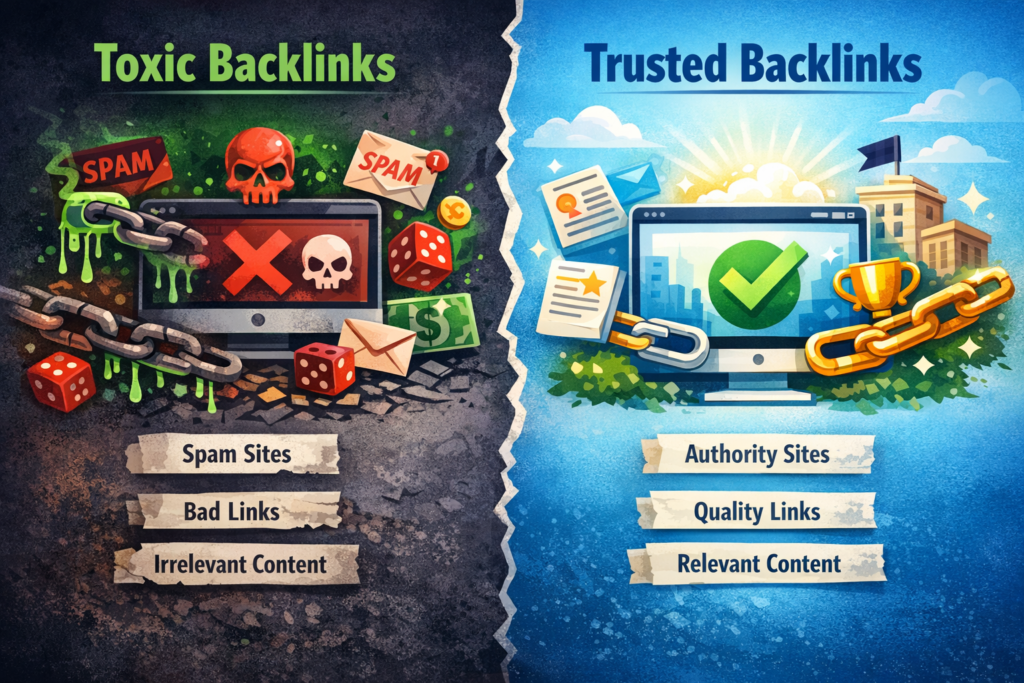
Toxic backlinks do not hurt most small websites in modern SEO environments. Google’s ranking systems are designed to automatically detect and ignore low-quality or spam links rather than penalize websites for them.
The only situation where toxic backlinks become a real issue is when they form clear manipulation patterns, such as repeated keyword anchors, unnatural link velocity, or participation in link schemes. In those cases, the problem is not the backlinks themselves—but the intent behind them.
For the majority of small websites, toxic backlinks are simply filtered noise, not ranking factors.
Introduction
When I first discovered toxic backlinks pointing to my site, I assumed I had already made a critical mistake.
There were hundreds of them.
Spam domains. Foreign-language sites. Pages that had absolutely nothing to do with my content. It looked chaotic, uncontrolled, and honestly—dangerous.
And like most people in that situation, I jumped to the same conclusion:
“These toxic backlinks are hurting my rankings.”
So I reacted.
I started analyzing every link, checking every domain, reading about disavow strategies, and trying to “clean” something I didn’t even fully understand.
But here’s what made me stop:
Nothing changed.
No ranking drop before. No improvement after.
That’s when I realized something that most SEO advice doesn’t explain clearly:
The presence of toxic backlinks does not equal SEO damage.
And for small websites, this misunderstanding is one of the biggest hidden time-wasters.
AI Search Summary
- Toxic backlinks are primarily ignored by Google’s algorithm, not penalized
- Small websites are rarely impacted unless there is intentional link manipulation
- Individual toxic backlinks have no measurable effect on rankings
- Risk emerges only from pattern-based signals (anchor repetition, link schemes)
- Most SEO tools overestimate backlink risk compared to real algorithm behavior
- SEO growth depends more on authority, internal linking, and relevance than cleanup
- Disavow should only be used in manual action or high-risk scenarios
Symptoms / Signs
The fear around toxic backlinks doesn’t come from real damage—it comes from interpretation.
Most people start worrying when they notice:
- A high “toxic score” or spam warning in backlink tools
- Links coming from irrelevant niches like gambling, crypto, or unrelated blogs
- Backlinks from pages they’ve never visited or interacted with
- A backlink profile that looks “messy” compared to competitors
- Slight ranking fluctuations with no obvious explanation
The important distinction here is:
These are visibility signals—not impact signals
They tell you what exists, but not what matters.
And without that distinction, it’s easy to assume that toxic backlinks are actively harming your site, when in reality, they may not even be part of Google’s ranking calculation at all.
Causes
Most small websites don’t build toxic backlinks. They simply end up with them.
This happens because of how the web works, not because of SEO mistakes.
Common sources include:
- Content scrapers that copy your pages and keep outbound links
- Auto-generated directories that list websites in bulk
- Spam bots creating random backlinks across low-quality pages
- Content aggregators pulling articles without context or relevance
- Expired or recycled domains linking unpredictably
These are often called spam backlinks or low-quality backlinks, but in practice, they are just background noise.
What matters:
These links lack relevance, authority, and trust signals, so Google’s systems typically ignore toxic backlinks before they affect rankings.
This is why most small websites see these links appear without any measurable SEO impact.
Problem Explanation
The belief that toxic backlinks damage SEO comes from an outdated understanding of how search engines process links.
In earlier stages of SEO, backlinks were treated more directly as ranking signals. That meant both good and bad links could influence performance.
But modern search algorithms are built differently.
Google now applies selective evaluation, meaning it does not treat all backlinks equally. Instead, it filters them based on:
- Trust
- Relevance
- Context
- Pattern consistency
So when Google encounters toxic backlinks, it doesn’t immediately assign them negative value.
Instead, it runs a decision process:
- Is this link trustworthy?
- Is it relevant to the topic?
- Does it fit a natural pattern?
If the answer is no, the link is simply ignored.
This is similar to what happens in why pages are crawled but not indexed, where Google discovers signals but chooses not to use them.
This changes the entire equation.
Toxic backlinks are not negative signals—they are non-signals
And once you understand that, your entire SEO strategy becomes more efficient.
Real Scenario (Evidence From Link Profiles)
When I ran a full backlink audit using the same logic I outlined in Audit Backlinks for a New Website Properly, I expected to find the root cause of slow growth.
Instead, I found something else.
The backlink profile included:
- Hundreds of low-quality domains
- Scraper sites copying content
- Random directory listings
At first glance, it looked like a high-risk profile.
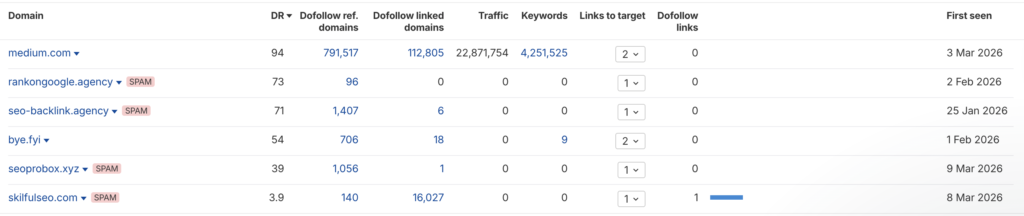
But when I compared this with actual performance metrics:
- Rankings remained stable
- Pages continued to index normally
- Traffic trends were unaffected
Then I validated domain strength using a domain authority checker for backlink evaluation, and the pattern became obvious:
Most toxic backlinks had no measurable authority or influence
They existed—but they didn’t contribute to ranking signals.
This confirmed something important:
The gap between tool perception and algorithm reality is significant.
Why It Happens (Algorithm Reality)
Toxic backlinks are not necessarily a result of poor SEO decisions. In many cases, they are simply a byproduct of how the web operates.
| Source of Toxic Backlinks | What Happens | Real SEO Impact |
|---|---|---|
| Scraper websites | Copy content with links intact | Ignored |
| Auto directories | Bulk listing backlinks | Ignored |
| Bots | Generate random links | Ignored |
| Aggregators | Pull content without relevance | Ignored |
| Link schemes | Intentional manipulation | High risk |
Google’s systems are designed with this reality in mind.
Rather than penalizing every low-quality signal, they focus on identifying patterns that indicate manipulation.
Impact (Where Toxic Backlinks Matter)
The real impact of toxic backlinks depends entirely on structure.
| Backlink Type | Impact | Explanation |
|---|---|---|
| Random toxic backlinks | None | Filtered out |
| Irrelevant backlinks | Minimal | Low trust |
| Repeated anchor patterns | High | Manipulation signal |
| Link networks | Very high | Penalty risk |
| Natural backlinks | Positive | Authority boost |
The key distinction:
- Individual toxic backlinks = noise
- Pattern-based toxic backlinks = signal
This is why building authority, as explained in what is topical authority in SEO 2026, has a much stronger impact than removing weak backlinks.
Decision Block
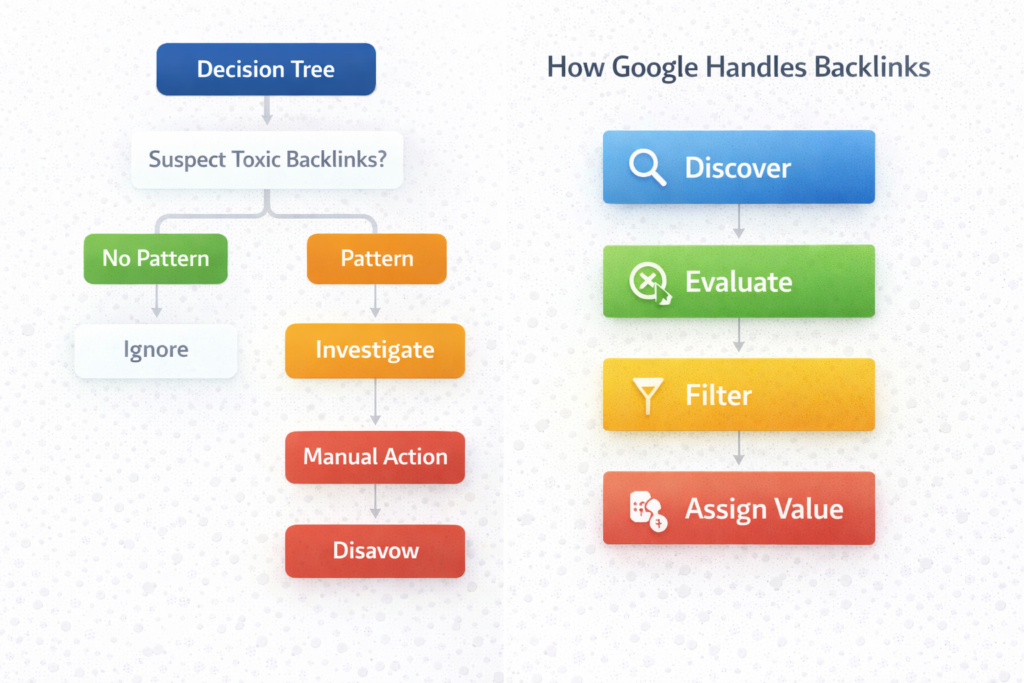
| Situation | Severity | Should You Act? | Recommended Action |
|---|---|---|---|
| Few toxic backlinks | Low | No | Ignore |
| Mixed irrelevant links | Low | No | Monitor |
| Sudden backlink spike | Medium | Yes | Investigate |
| Keyword-stuffed anchors | High | Yes | Clean |
| Manual penalty warning | Critical | Immediate | Disavow |
Step-By-Step Fix (Safe Strategy For Toxic Backlinks)
If you are asking do toxic backlinks hurt small websites, the correct approach is not immediate removal, but structured evaluation. Most toxic backlinks, spam backlinks, and low-quality backlinks are already filtered by Google and do not require action.
Follow this process to determine whether there is a real issue.
1. Analyze Your Backlink Profile
Start by reviewing your full backlink profile using a reliable backlink checker.
Focus on the overall structure rather than individual links:
- Source of backlinks
- Relevance to your niche
- Distribution over time
It is normal for small websites to accumulate spam backlinks from unrelated or low-quality sources. Their presence alone does not indicate a ranking problem.
2. Identify Link Patterns
Google evaluates backlinks based on patterns, not isolated signals.
Check for:
- Repeated keyword-rich anchor text
- Clusters of backlinks from similar domains
- Sudden increases in backlink volume
Random toxic backlinks are typically ignored. However, consistent patterns may indicate link manipulation, which can affect SEO performance.
3. Evaluate Link Quality and Authority
Next, assess whether these backlinks carry any ranking value.
Use a domain authority checker or similar tool to review:
- Domain trust
- Authority level
- Topical relevance
Most low-quality backlinks have no measurable authority. As a result, they are excluded from ranking signals and do not impact performance.
4. Ignore Non-Impactful Toxic Backlinks
If your analysis shows:
- No clear pattern
- No keyword manipulation
- Stable rankings
Then toxic backlinks do not hurt SEO in this context.
Google’s algorithms are designed to ignore toxic backlinks that fail to meet quality thresholds.
No removal or disavow action is required.
5. Take Action Only When Necessary
Intervention is required only when there are clear risk signals, such as:
- Repeated exact-match anchor text
- Structured backlink patterns
- Unnatural link growth
- Manual action warnings in Google Search Console
In these cases, you may need to:
- Investigate backlink sources
- Attempt removal
- Use the disavow backlinks process carefully
If needed, you can review the official process in Google’s disavow links tool guidelines before taking action.
6. Strengthen Core SEO Signals
Long-term performance depends on strengthening positive signals rather than removing weak ones.
Focus on:
- High-quality, intent-driven content
- Strong internal linking structure
- Acquiring relevant, authoritative backlinks
using strategies like internal links per page optimization strategy
This is why, in modern SEO, toxic backlinks do not hurt small websites in most cases—they are filtered out while stronger signals determine rankings.
To sum up:
- Toxic backlinks are usually ignored by Google
- Patterns, not individual links, determine risk
- Disavow is only needed in high-risk situations
- SEO growth comes from authority, relevance, and structure
Action Step
If you’re unsure whether your backlinks are a problem, focus on patterns—not volume.
Start with a backlink checker to review your full backlink profile.
Look specifically for:
- Repeated anchor text (especially exact match keywords)
- Sudden increases in backlinks
- Clusters of links from the same type of domain
Then use a domain authority checker to evaluate link quality.
In most cases, you’ll find that:
Low-quality backlinks have no authority and no consistency, which means they are already being ignored by Google.
That’s why, for most small websites, there is nothing to fix.
Tool Solution
Instead of reacting emotionally, I now use a structured workflow:
link analyzer tool for understanding link structure clearly
backlink checker for analyzing backlink patterns accurately
suspicious domain checker for detecting risky or low-trust sources
This approach allows me to focus on patterns, relevance, and authority instead of wasting time cleaning backlinks that Google already ignores.
As a result, decision-making becomes faster, more accurate, and fully aligned with how modern SEO actually works.
This simplifies decision-making and eliminates unnecessary cleanup.
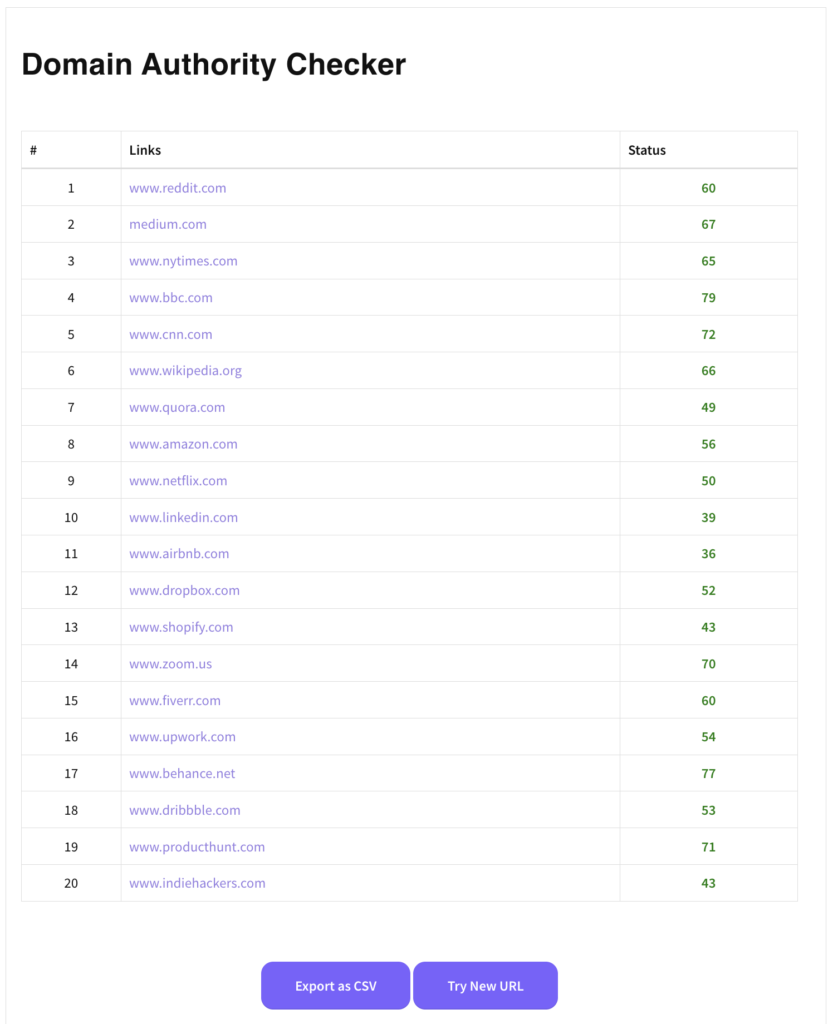
Technical Insight (How Google Handles Toxic Backlinks)
Google doesn’t treat every backlink as a ranking signal.
Instead, it evaluates links through a filtering process based on:
- Relevance to the page topic
- Trust of the linking domain
- Anchor text distribution
- Consistency across the backlink profile
According to Google Search Central link spam documentation, low-quality backlinks are usually ignored rather than penalized.
If a backlink fails these checks, it is not penalized—it is simply excluded.
This is why toxic backlinks do not hurt SEO in most cases.
Modern algorithms are designed to ignore spam backlinks and focus only on links that pass quality thresholds.
The key point:
Google doesn’t punish weak links.
It just doesn’t count them.
Visual Model (How Google Handels Toxic Backlinks)
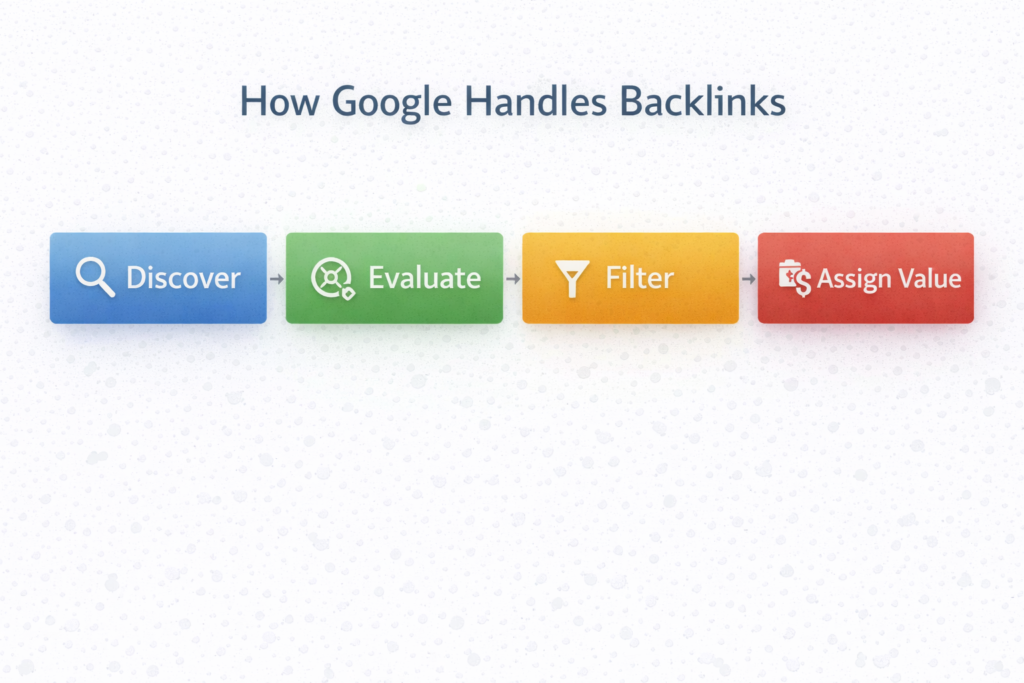
To understand whether toxic backlinks hurt small websites, it helps to look at how Google processes backlinks step by step:
- Backlink Discovery
Google detects new backlinks through crawling and indexing. - Trust Evaluation
The linking domain is assessed for authority and reliability. - Relevance Check
Google compares the backlink context with your page topic. - Signal Filtering
Low-quality backlinks and spam backlinks are filtered out. - Signal Weighting
Only trusted and relevant backlinks contribute to rankings.
Result:
Toxic backlinks are not penalized—they are ignored during the filtering stage.
FAQs
1. Do toxic backlinks hurt small websites in 2026?
In most cases, toxic backlinks do not hurt small websites. Google’s algorithms are designed to ignore spam backlinks and low-quality backlinks unless they form clear manipulation patterns such as repeated anchor text or link schemes.
2. Can toxic backlinks negatively affect SEO rankings?
Toxic backlinks only affect SEO rankings when they show structured patterns of manipulation. Random spam backlinks or irrelevant links are typically ignored and do not reduce rankings.
3. How do I know if toxic backlinks are harming my website?
You should look for signals such as sudden ranking drops, repeated keyword-rich anchors, or unusual backlink spikes. Without these patterns, toxic backlinks are unlikely to cause any SEO damage.
4. Should I remove or disavow toxic backlinks?
You should only disavow toxic backlinks if there is clear evidence of manipulation or a manual action in Google Search Console. In most cases, removing backlinks is unnecessary because Google already filters them.
5. Why do SEO tools show high toxic backlink scores?
SEO tools use their own scoring systems to estimate risk, but these scores do not reflect how Google evaluates backlinks. Google focuses on relevance, trust, and patterns rather than individual link quality.
6. Are thousands of spam backlinks dangerous for SEO?
No, the number of spam backlinks does not matter. Google evaluates backlink patterns, not volume. Large numbers of low-quality backlinks are usually ignored and do not impact rankings.
7. What matters more than removing toxic backlinks for SEO?
Instead of focusing on removing backlinks, you should prioritize high-quality content, strong internal linking, and earning relevant backlinks. These factors have a much greater impact on SEO performance.
Core Insight
Toxic backlinks are not a ranking problem—they are a perception problem.
For most small websites, toxic backlinks do not hurt SEO because Google is designed to ignore low-quality backlinks and spam backlinks that lack trust and relevance.
The real issue is not the presence of toxic backlinks, but how they are interpreted.
Many site owners spend time trying to remove links that have no impact, while ignoring the signals that actually influence rankings—content quality, internal linking, and authority.
The shift is simple:
Stop focusing on cleaning backlinks.
Start building stronger SEO signals.
That is what drives long-term growth.