

Keyword research used to be simple. You found a keyword, wrote a page around it, built a few links, and waited. That approach no longer works reliably. In 2026, Google does not rank individual keywords in isolation. It evaluates how well a site covers an entire topic.
This shift is why many websites struggle to grow despite publishing more content. They are targeting keywords one by one, without a clear topical structure. Keyword clustering solves this problem. When done correctly, it helps search engines understand what your site is truly about and helps users find deeper, more relevant information.
As an SEO consultant, I now see keyword clustering as a foundational strategy rather than an advanced tactic. Tools that generate keyword cluster ideas make this process faster, but only if you understand how to use them correctly. This guide explains what keyword clustering really is, why it matters in 2026, and how to apply it in a practical, ranking-focused way.
Why Keyword Cluster Ideas Matter More Than Ever in 2026
Google’s ranking systems have moved decisively toward topic-based evaluation. Instead of asking whether a page targets a specific keyword, Google increasingly asks whether a site demonstrates authority across a subject area.
This change is driven by improvements in natural language processing and entity understanding. Search engines can now recognize when multiple keywords represent the same intent or closely related intents. When content is fragmented across isolated pages with no clear structure, relevance signals weaken.
Google Search Central – How Search Works (topics & relevance)
Keyword clustering addresses this by grouping related keywords into logical themes. Each cluster represents a topic, not just a phrase. This allows you to create content that is more comprehensive, internally connected, and easier for both users and search engines to understand.
In practice, sites that use clustering effectively tend to index faster, rank more consistently, and suffer less from keyword cannibalization. In 2026, this approach is no longer optional for competitive niches.
What a Keyword Cluster Ideas Tool Actually Does
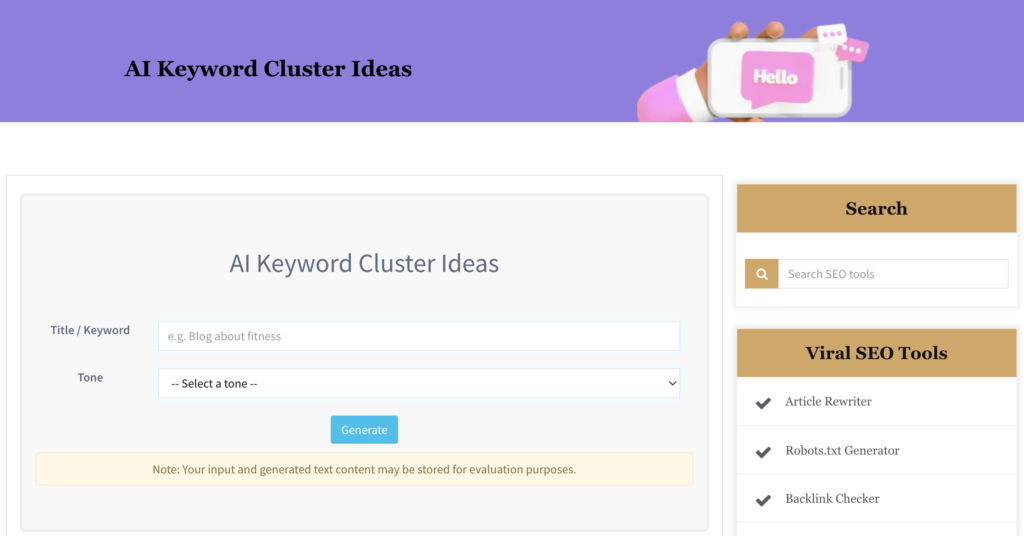
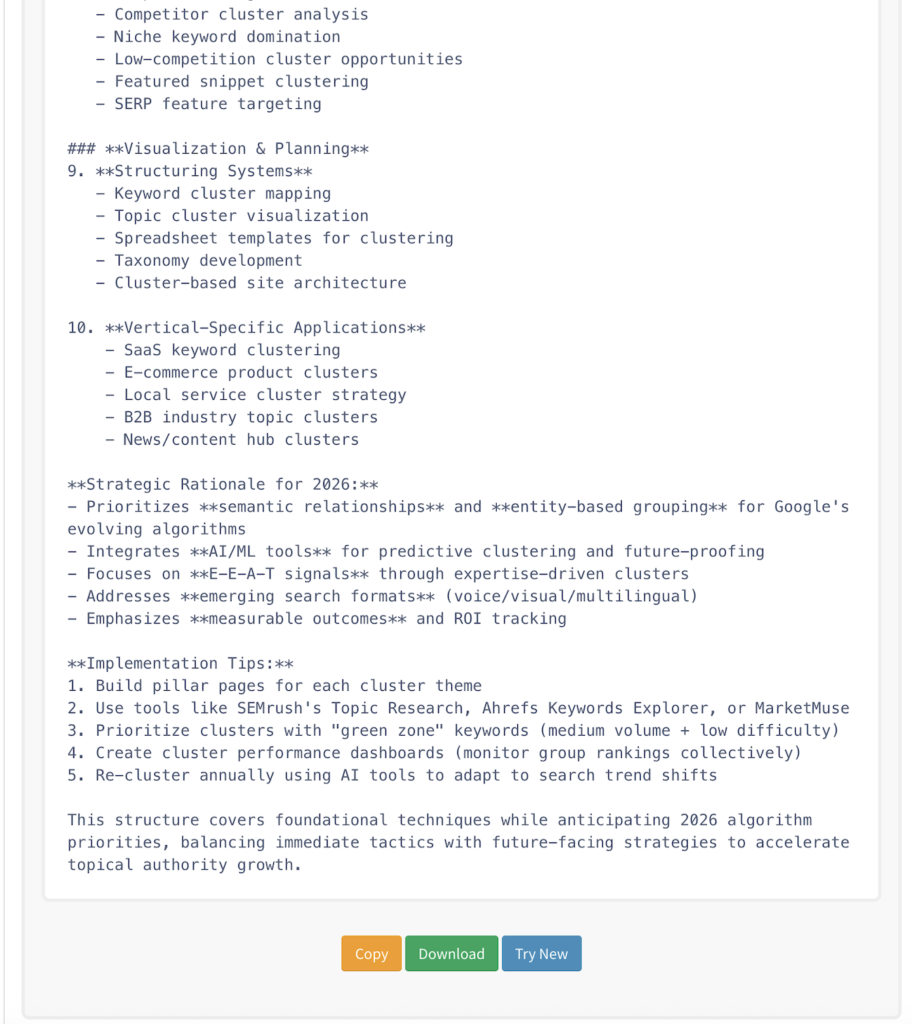
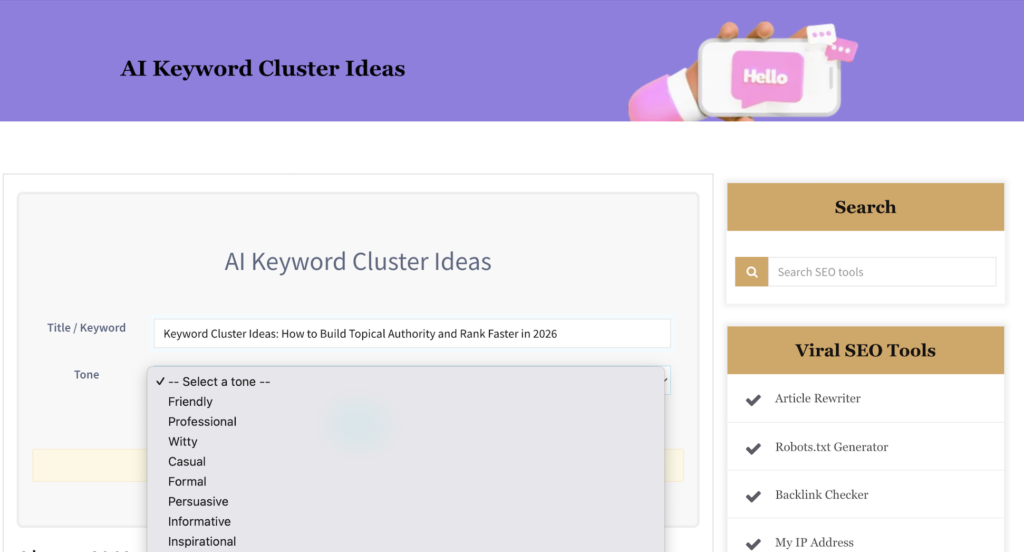
A keyword cluster ideas tool takes a list of keywords and organizes them based on semantic similarity and search intent. Instead of returning a flat list, it groups keywords into clusters that can be mapped to individual pages or content hubs.
This is fundamentally different from traditional keyword research tools, which prioritize volume and difficulty metrics without explaining how keywords relate to each other. Clustering tools focus on structure.
However, it is important to be clear about their limitations. These tools identify patterns, not strategy. They do not know your business goals, your audience, or your existing site architecture. They provide suggestions, not decisions.
When used properly, a clustering tool saves time and reveals opportunities you might miss manually. When used blindly, it can lead to overproduction of thin or redundant content. The value comes from interpretation, not automation alone.
Keyword cluster ideas help organize content around user intent, making it easier for Google to understand topical relevance.
Common Keyword Research Mistakes I See in Real SEO Audits
One of the most common issues I encounter during audits is isolated keyword targeting. Sites create separate pages for keywords that clearly belong to the same intent group. This splits relevance and often causes pages to compete with each other.
Another frequent mistake is focusing too heavily on search volume. High-volume keywords are attractive, but without topical support, they are difficult to rank for. Lower-volume cluster keywords often drive more consistent traffic when grouped correctly.
I also see many sites misjudge intent. Informational, commercial, and transactional queries are mixed into the same page, creating confusion for users and search engines alike.
Finally, there is a tendency to publish clusters without internal linking. Even well-structured clusters fail if pages are not clearly connected. Keyword clustering is as much about architecture as it is about keywords.
How to Use a Keyword Cluster Ideas Tool Properly
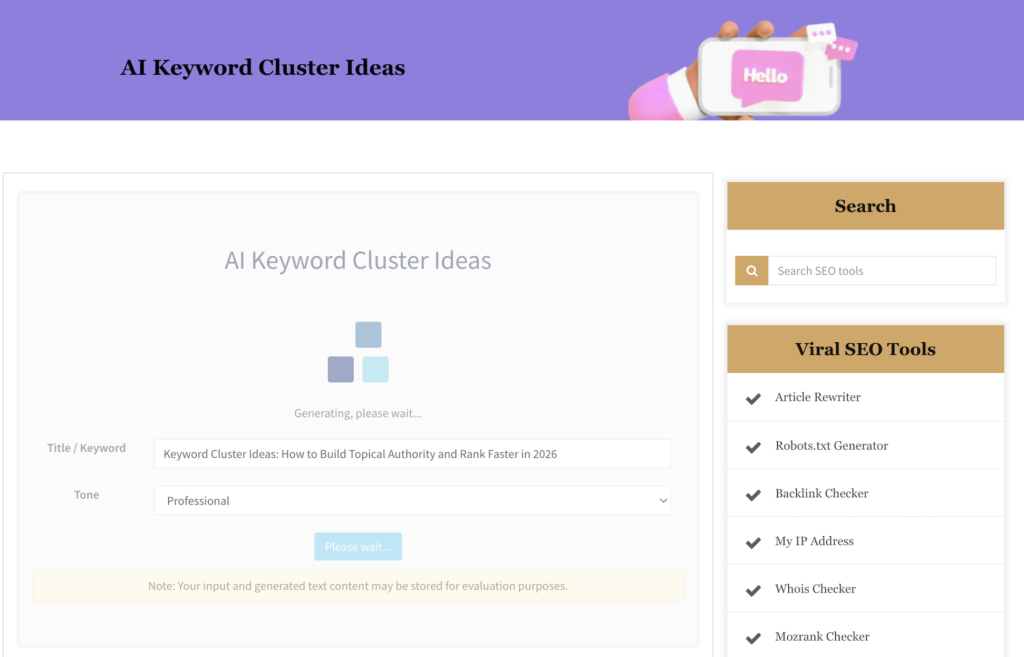
The process starts with a strong seed keyword. This should represent a core topic, not a narrow phrase. For example, “technical SEO” works better than “how to fix crawl errors.”
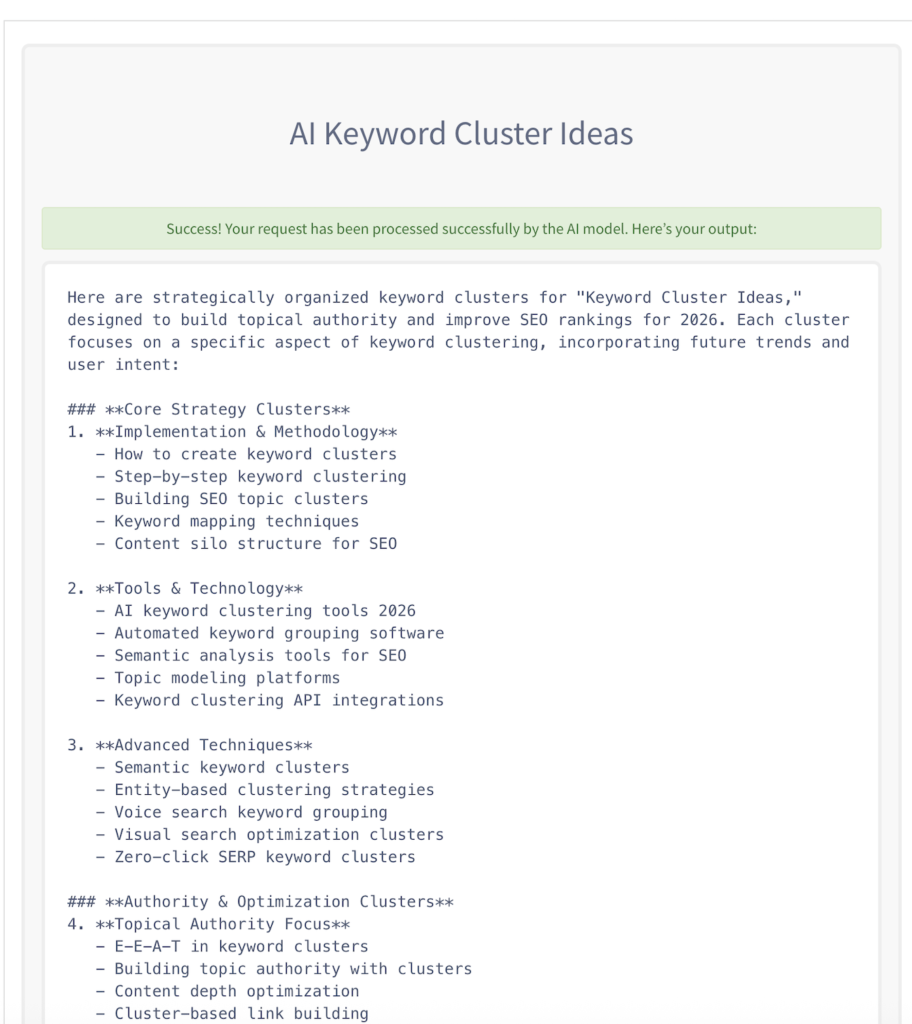
Once the tool generates clusters, review them carefully. Look for patterns in intent rather than exact wording. Keywords that ask similar questions or imply the same goal usually belong together, even if they look different on the surface.
Next, map each cluster to a specific page type. Some clusters are best suited for pillar pages, while others work as supporting articles. Not every cluster needs its own page immediately. Prioritization matters.
Before creating content, review your existing pages. You may already have content that fits a cluster but needs consolidation or optimization. Keyword clustering often reveals opportunities to improve structure without publishing new pages.
Real Keyword Cluster Examples: Poor vs Optimized Structure
Consider a site targeting SEO beginners. A poor structure might include separate pages for “what is keyword research,” “how to find keywords,” and “keyword research tools,” all competing for similar queries with overlapping content.
An optimized clustered structure would use one pillar page explaining keyword research comprehensively. Supporting pages would then address tools, advanced techniques, and common mistakes, all internally linked back to the main page.
The difference is clarity. In the optimized version, each page has a distinct role within a topic. Search engines can easily understand the hierarchy, and users can navigate naturally between related content.
This is the practical advantage of keyword clustering. It replaces guesswork with structure.
Best Practices for Building SEO Keyword Clusters That Rank
Start by grouping keywords by intent, not modifiers. Words like “best,” “free,” or “2026” are important, but intent determines structure.
Limit the size of each cluster. Overloaded clusters lead to unfocused pages. A good rule is one primary intent per page, supported by closely related variations.
Ahrefs – Keyword clustering guide
Use internal linking deliberately. Every cluster should have a clear pillar or hub page that links to supporting content and receives links in return. This reinforces topical relevance.
Finally, review clusters periodically. Search behavior changes, and clusters should evolve with it. Updating structure is often more effective than publishing new content blindly.
Keyword Clustering vs Traditional Keyword Research in 2026
Traditional keyword research still has value, particularly for understanding demand and competitiveness. However, it is insufficient on its own.
Keyword clustering adds context. It explains how keywords fit together and how content should be organized. In modern SEO, structure often matters more than individual keyword metrics.
The most effective approach combines both methods. Use traditional tools to identify opportunities, then apply clustering to decide how those opportunities should be implemented.
This hybrid strategy reflects how search engines evaluate content today.
Is Keyword Clustering Safe for SEO and AdSense?
Yes, when done correctly. Keyword clustering encourages higher-quality content, clearer intent, and better user experience. These align directly with Google’s content guidelines.
From an AdSense perspective, clustered content reduces the risk of thin pages and duplication. Well-structured articles with clear purpose are easier to review and approve.
Problems only arise when clustering is used to mass-produce low-value pages. Quality, not quantity, remains the deciding factor.
Google Search Central – Helpful content system
Frequently Asked Questions
How many keywords should be in one cluster?
There is no fixed number, but clusters should represent one clear intent. Focus on relevance, not count.
Can keyword clustering cause cannibalization?
Proper clustering reduces cannibalization by defining page roles clearly.
How often should clusters be updated?
Review them when rankings shift, new topics emerge, or content grows significantly.
Do keyword clusters work for small websites?
Yes. In fact, they are often more effective for smaller sites building authority from scratch.
Related Reading: Keyword Research & Topical Authority
To go deeper into structured keyword strategy, explore these guides:
- Keyword Cluster Ideas for Affiliate Sites — applying clusters in real projects.
- What is Topical Authority in SEO (2026) — why structure matters for rankings.
- AI SEO Tracking Tools vs Traditional SEO Tools — visibility beyond keywords.
- Keyword Density Checker — how to use density inside clusters.
- What is Keyword Density Checker — clear definition and use cases.
Conclusion
Keyword clustering is not a shortcut or a trend. It reflects how search engines interpret content in 2026. By organizing keywords into meaningful topics, you create content that is easier to rank, easier to maintain, and more useful to users.
A keyword cluster ideas tool can accelerate this process, but success depends on how thoughtfully you apply its output. Strategy still matters.
When clustering is used as part of a broader content and architecture plan, it becomes one of the most reliable ways to build sustainable organic growth.