

Quick Answer
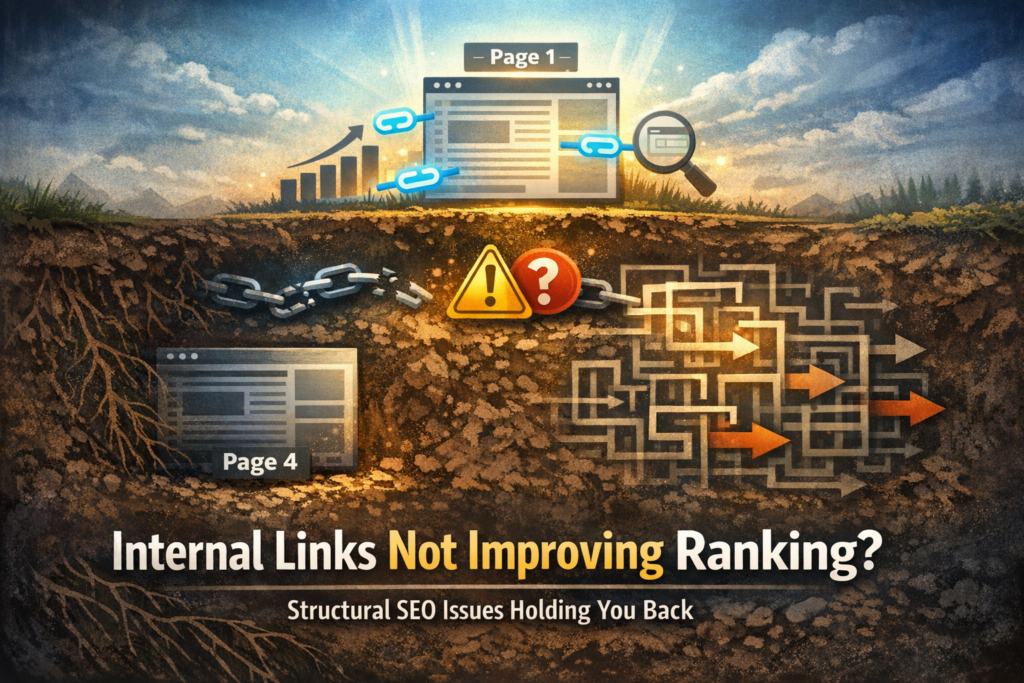
Internal links not improving ranking is a common SEO issue on growing websites. When internal links are not improving ranking becomes a persistent issue, the cause usually lies in structural SEO signals rather than the links themselves.
Internal links distribute authority across a site, but they influence rankings only when surrounding signals confirm that the destination page deserves higher visibility.
In practice, this means internal links work best when they originate from strong pages, relevant context, and a clear site structure.
Symptoms – Situation
During technical SEO reviews, a recurring pattern appears on growing websites: internal links are added across several articles, yet the expected ranking improvement never arrives.
Typical signals include:
- a page receives several internal links but remains beyond page three
- impressions increase slightly while ranking position barely moves
- linking pages themselves have little search visibility
- anchor text exists but the surrounding content is weak
- the target page sits deep inside the navigation structure
One of the clearest signs of internal links not improving ranking is when a page receives multiple contextual links but its position remains unchanged.
When these patterns appear together, the issue usually lies in how search engines interpret the structural importance of the page, not the existence of links.
Improving architecture often strengthens link impact. Structural adjustments such as those explained in How to Reduce Crawl Depth on a Small Website frequently increase how strongly internal links influence rankings.
Decision Block
Before adjusting internal linking strategy, it helps to identify which condition applies.
To understand why internal links not improving ranking happens, it is important to identify the structural condition causing it.
| Situation | What It Means | SEO Impact |
|---|---|---|
| Links originate from weak pages | Linking pages pass limited authority | Low ranking signal |
| Context between pages is unclear | Topic mismatch between pages | Reduced relevance |
| Target page sits deep in the site | Low crawl frequency | Lower structural priority |
| Page still under index evaluation | Search engine still testing signals | Delayed ranking response |
Recognizing which scenario exists helps prevent unnecessary changes to internal links.
Why Internal Links Not Improving Ranking Happens
Internal linking is often presented as one of the easiest SEO improvements.
The concept appears simple: connect related pages and rankings should improve.
However, experience shows that internal linking alone rarely guarantees ranking movement. Search engines evaluate links within the broader structure of the site.
Internal links help search engines understand three key elements:
- which pages matter most inside the site
- how topics connect across the content structure
- how crawlers move through the website
When those signals align, internal links strengthen rankings. When they conflict, internal links may produce very little effect.
Why Internal Links Sometimes Fail
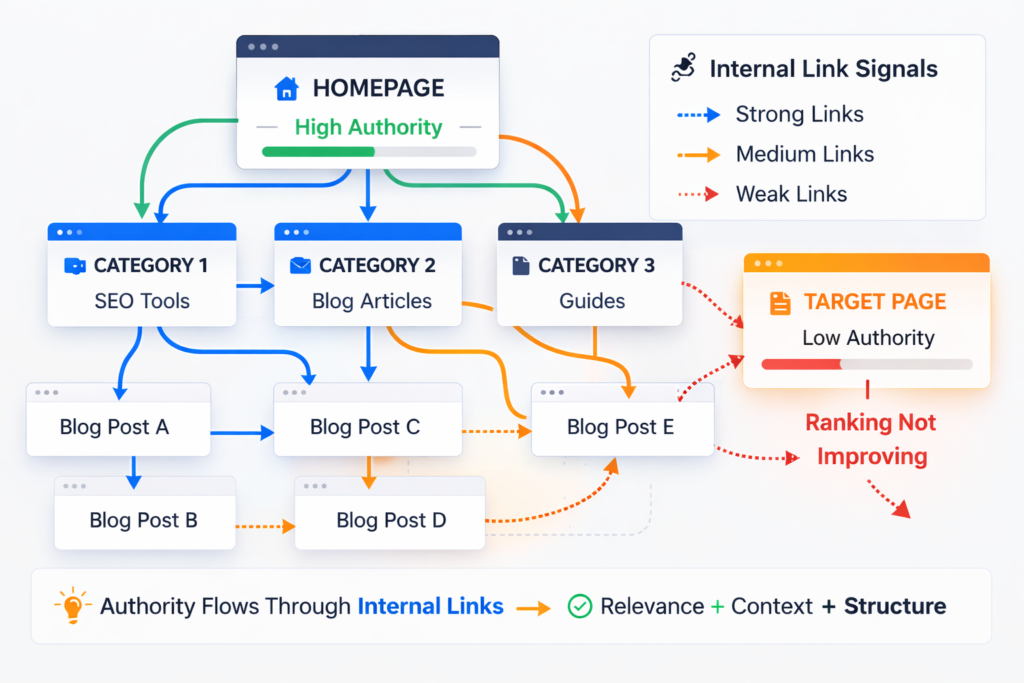
Several structural factors can weaken internal link impact.
Weak Source Pages
Links from pages with little visibility pass limited authority. Pages already receiving impressions or traffic usually distribute stronger internal signals.
Contextual Relevance
Search engines evaluate the surrounding paragraph to understand why the link exists.
For instance, discussions about internal linking strategies naturally connect to How Many Internal Links Per Page Is Optimal, since both topics belong to the same structural SEO cluster.
Crawl Depth
Pages that require many clicks to reach from the homepage receive less crawl attention. Even well-placed internal links may struggle to influence rankings until the structural accessibility improves.
Link Dilution
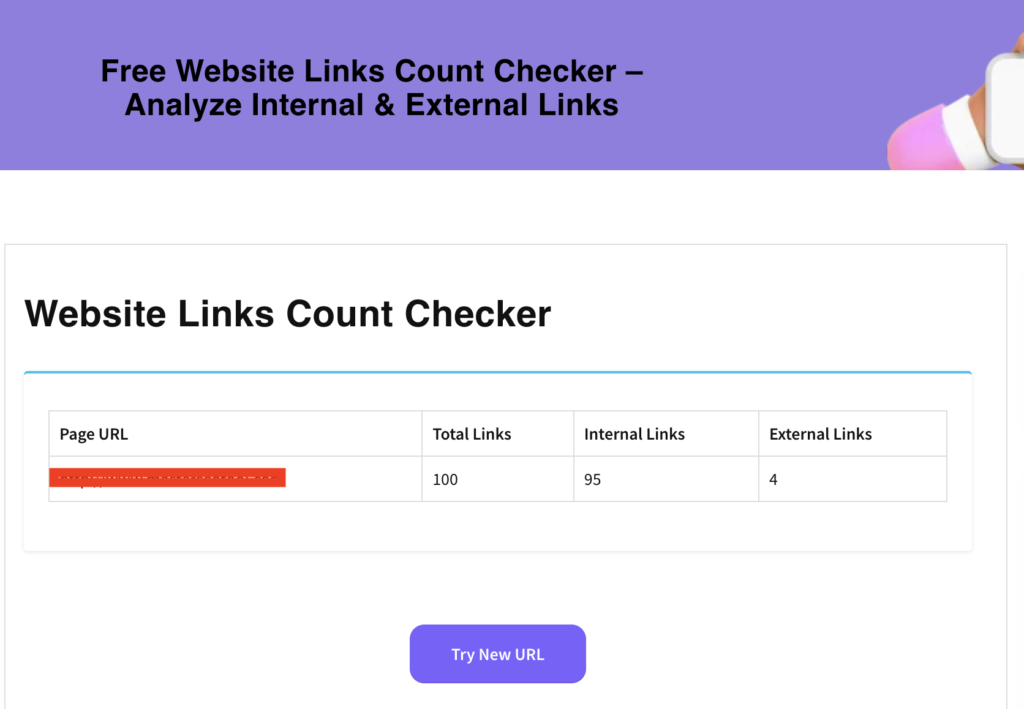
Pages linking to dozens of destinations distribute authority across many links, reducing the value passed to each page.
In situations like this, checking the number of outgoing links helps. A quick scan with the Website Links Count Checker helps detect pages where link dilution may weaken internal links ranking signals.
How Search Engines Interpret Internal Links
Search engines analyze internal links through several structural signals.
| Signal | What Search Engines Learn |
|---|---|
| Number of contextual links | Structural importance of a page |
| Topic alignment between pages | Topical authority |
| Navigation paths | Crawl discovery priority |
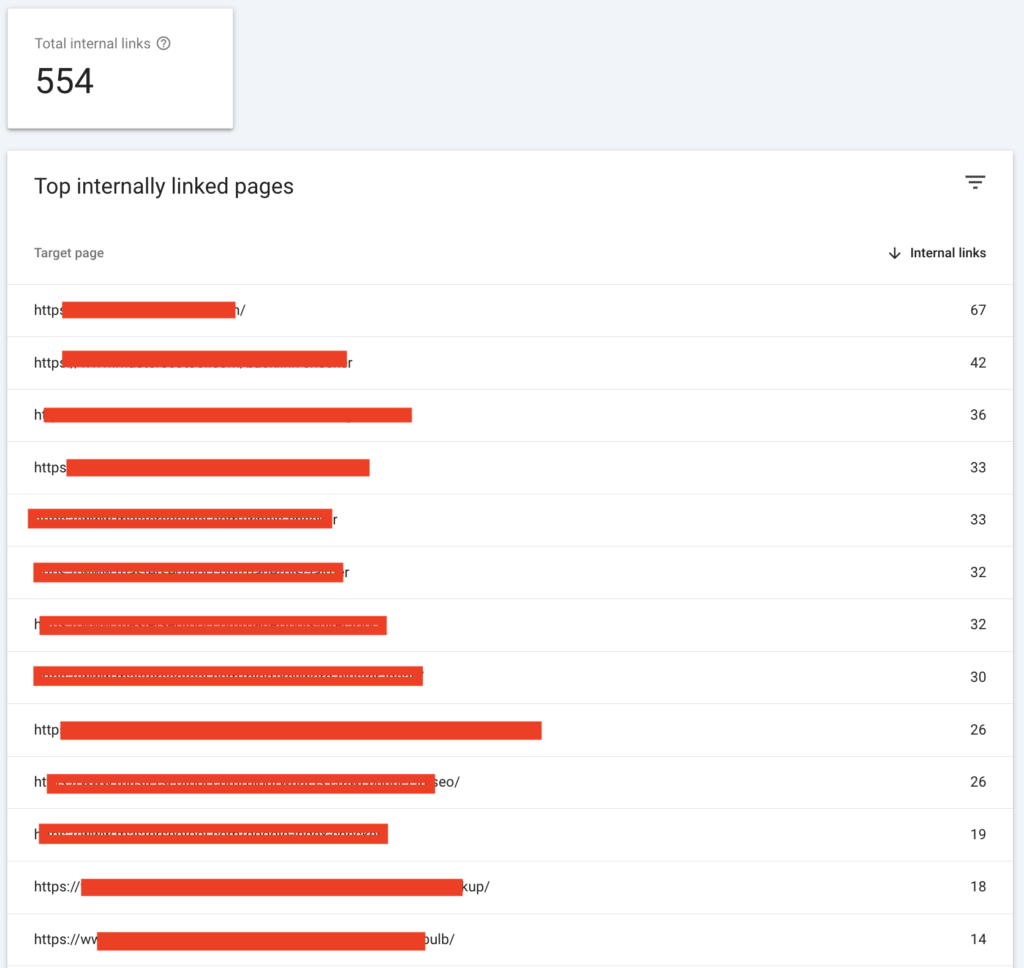
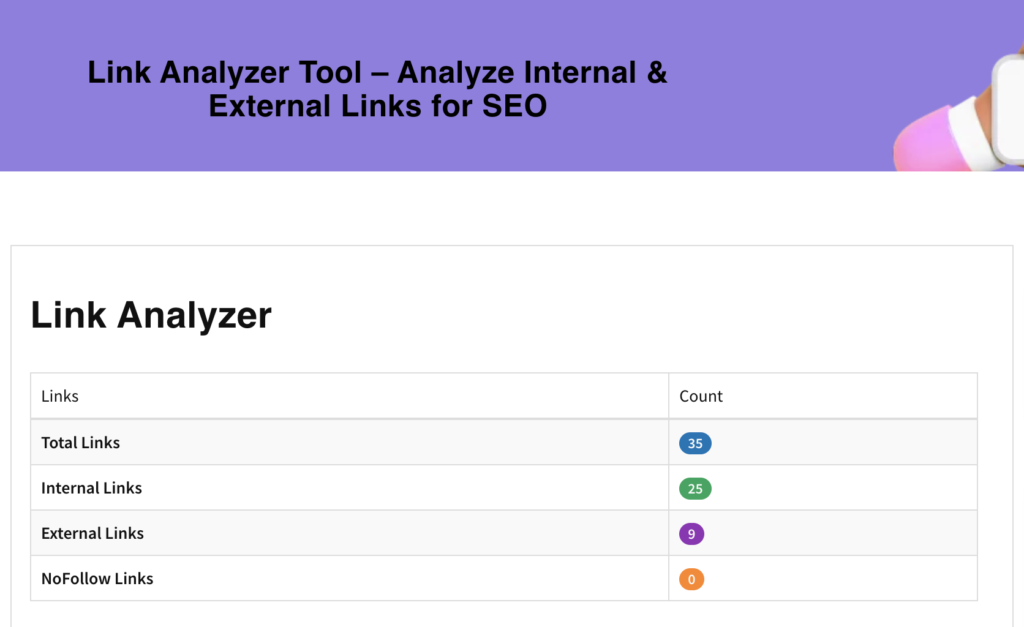
To visualize these connections, the Link Analyzer Tool helps map how pages link to each other and whether important pages receive enough structural signals.
These signals also interact with indexing factors. Pages experiencing indexing issues, like those explained in Crawled – Currently Not Indexed Fix, may not benefit from internal links until indexing stability improves.
Real SEO Scenario
Consider a situation where a content site builds several internal links pointing to one important guide.
At first glance the setup appears correct. Multiple articles reference the guide and the anchor text clearly describes the topic.
However, deeper analysis often reveals the real issue.
Most linking pages may be buried deep in the site structure and receive minimal crawl activity. As a result, the authority passed through those links remains weak.
Once stronger pages begin linking to the guide and structural depth is reduced, ranking improvements usually start appearing within several weeks.
Situations like this clearly demonstrate why internal links not improving ranking often point to structural issues.
Example Case
| Step | What Happened |
|---|---|
| Initial situation | 15 internal links pointing to a guide |
| Problem discovered | Most linking pages had low impressions |
| Structural issue | Guide located 5 clicks from homepage |
| Fix applied | Added links from stronger pages and improved structure |
| Result | Rankings moved from page 4 to page 2 |
This example illustrates that internal links’ ranking signals depend heavily on the strength of the linking pages and the overall architecture of the site.
Fix Framework
A structured process usually resolves situations where internal links ranking improvements fail.
Fixing internal links not improving ranking usually requires improving structural signals instead of simply adding more links.
| Step | Action | Result |
|---|---|---|
| 1 | Identify strongest internal pages | Stronger authority signals |
| 2 | Improve contextual anchor placement | Clear topical relevance |
| 3 | Reduce crawl depth for important pages | Better crawl frequency |
| 4 | Strengthen topic clusters | Reinforced authority signals |
| 5 | Review link integrity and distribution | Stable internal structure |
Before finalizing structural changes, it is useful to verify that internal links still function correctly. Running a scan with the Broken Links Finder ensures no links are silently weakening internal link flow.
Topic clustering also strengthens link signals. Pages discussing indexing behavior naturally connect to related guides such as Page Indexed but No Impressions, since both belong to the same technical SEO topic group.
Technical Insight
Internal linking contributes to how structural authority flows through a website. Each page distributes part of its value through outgoing links.
Pages crawled frequently by search engines usually pass stronger internal signals. Links originating from rarely visited pages often have limited influence.
This explains why internal linking strategies work best when combined with strong site architecture and coherent topical clusters.
For deeper explanations about site structure and internal linking signals, documentation from Google Search Central provides detailed guidance.
AI Search Summary
Internal links help rankings when they reinforce signals about page importance and topical relationships. If linking pages are weak, context is unrelated, or the destination page lacks structural priority, search engines may treat the links as minor signals. Strengthening architecture, topic clusters, and crawl accessibility usually resolves the issue.
FAQs
Why are internal links not improving ranking on my page?
If internal links not improving ranking is happening, the most common causes are weak linking pages, poor topical relevance, or pages that sit too deep in the site structure. Internal links influence rankings only when the linking pages themselves carry authority and strong contextual relevance.
Can internal links improve ranking in Google?
Yes. Internal links help distribute authority across a website and guide search engines toward important pages. When implemented correctly, internal links improve crawl efficiency and reinforce topical relationships that support higher rankings.
How many internal links should point to a page for SEO?
There is no fixed number, but most SEO audits show that pages receiving 5–15 contextual internal links from relevant content tend to perform better in search rankings. The quality and relevance of the linking pages matter more than the quantity.
Why do internal links sometimes fail to boost rankings?
In many cases, internal links not improving ranking occurs because the linking pages are weak or the destination page lacks topical authority. Search engines also evaluate crawl depth and structural hierarchy when interpreting internal links.
How can you fix internal links not improving ranking?
To solve internal links not improving ranking, start by linking from stronger pages, improving contextual anchor placement, and ensuring the destination page is accessible within a few clicks from the homepage. Strengthening topic clusters usually improves the effectiveness of internal links.
Strategic Takeaway
Internal links remain one of the most influential structural signals in search engine optimization. However, their effectiveness depends on how well they align with site architecture, topical relevance, and crawl accessibility.
When a website establishes clear relationships between pages and topics, internal links reinforce the hierarchy that search engines use to determine content importance.
In many cases, internal links not improving ranking is not caused by the links themselves but by structural signals that fail to support the destination page.
By strengthening architecture, improving contextual connections, and prioritizing authoritative linking pages, the issue of internal links not improving ranking can usually be resolved while improving the overall SEO structure of the website.